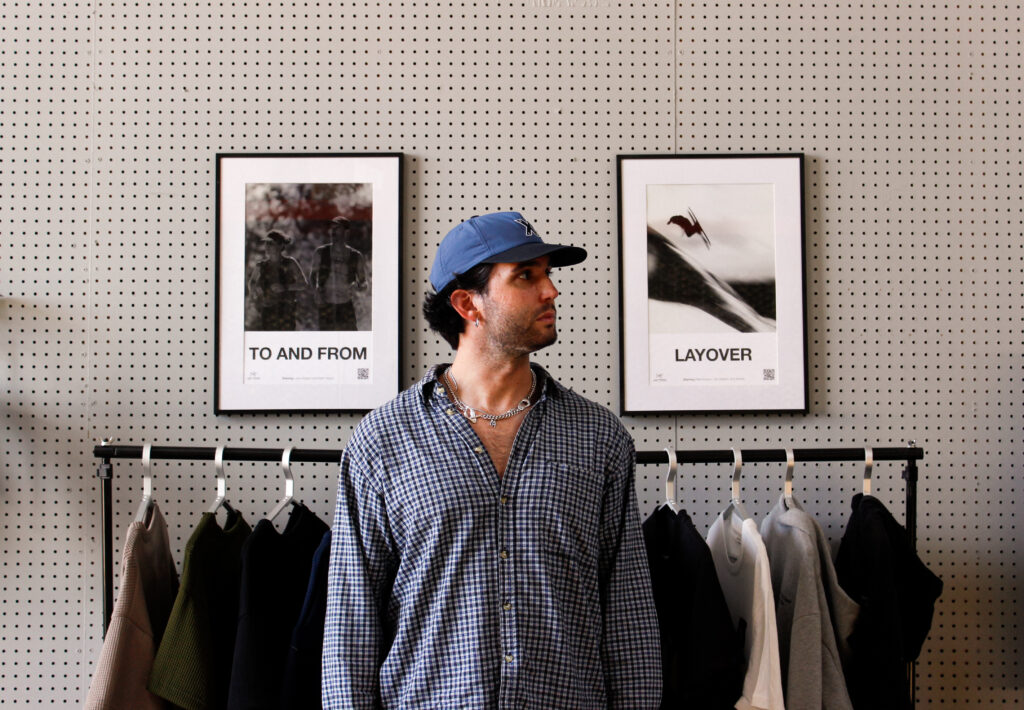
In the short film “To and From,” we see ultra runners Laura Kaplan and Keith Hayes run from their front door in Boulder, Colorado to the summit of Long’s Peak and back in a self-powered mountaineering project less than five individuals have completed.
The film was produced by Malcolm Pascotti, then working with Arc’Teryx and now founder and designer behind Can’t Buy Cool Studios and directed by Josiah Jones of Outland Film. And like any moving sports documentary, “To and From,” shows more than elite athleticism. Rather, the film confronts the innately human instinct to resist suffering.
The film tracks Hayes and Kaplan’s throughout a route totaling over 100 miles – a half-way point 14,259 feet above sea level in the dead of night and a quiet finish line back in their own beds. The result is a nine-minute reflection on the deeply earnest work of exploring for the sake of exploring, pushing the human body to its limits not for accolades or big-time recognition but for the self-satisfaction of perseverance.
As independent film curators Beyond the Short puts it: “When someone chooses the path of most resistance, we find it odd. However, only that person can truly answer what drives them to remain on that path.”
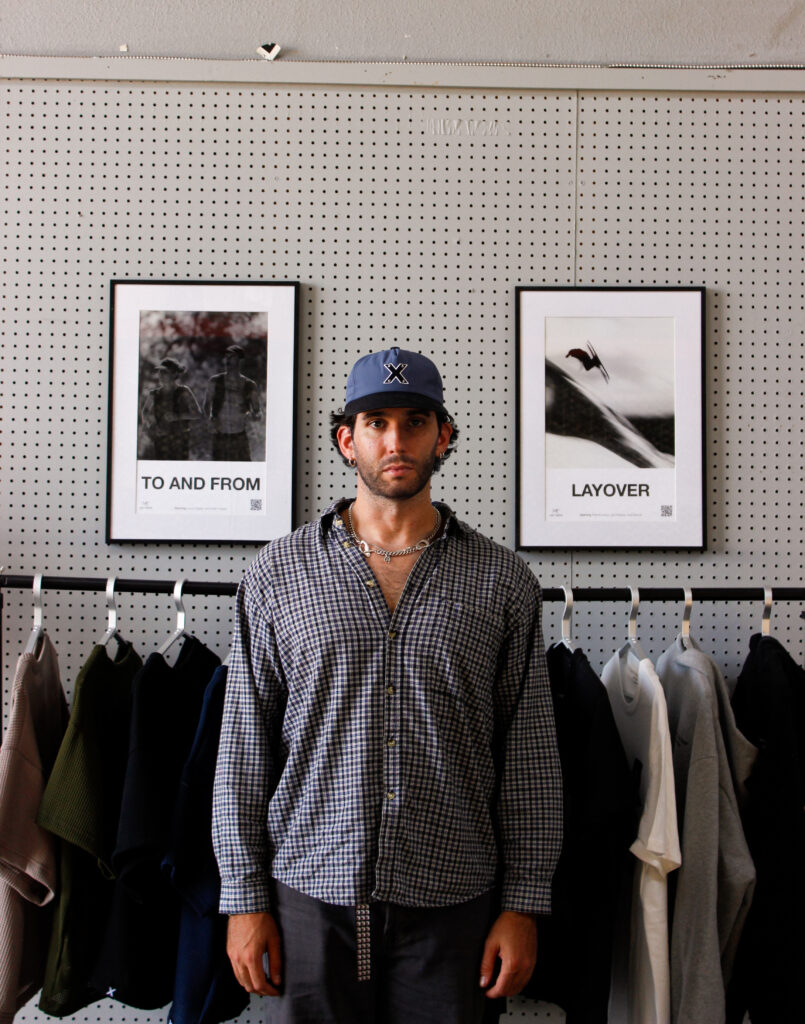
For founder and designer Malcolm Pascotti, the film is an apt reflection of his personal ethos. In fact, perseverance without expectation is deeply woven into his technical outdoor gear label, Can’t Buy Cool Studios.
And not for nothing: Pascotti hasn’t walked the path of least resistance for quite some time. As the brains and labor behind Can’t Buy Cool Studio, no single day is alike. On any given day, Pascotti balances the work of a full-stack production team: designing gear, researching textiles, shooting video and photo, packing orders from his warehouse, performing supplier site visits for boots-on-the-ground quality control.
“It’s probably the best and worst way to run a business imaginable, I think,” Pascotti shared.
Running a one-man operation may always be the path of most resistance. It’s also the key to maintaining Can’t Buy Cool Studios’ core value of authenticity.
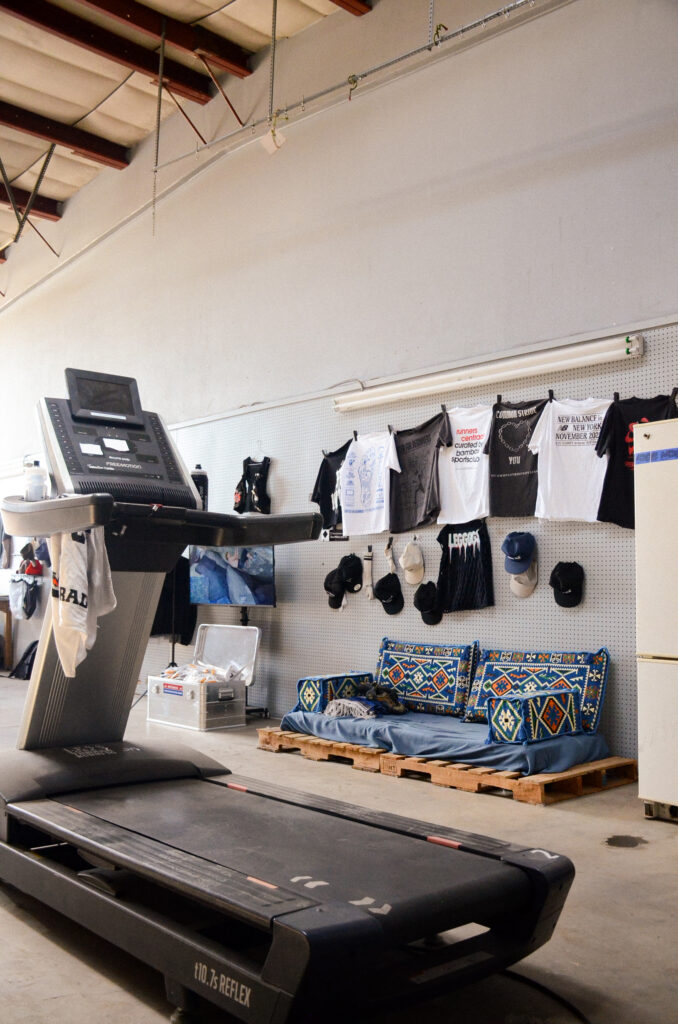
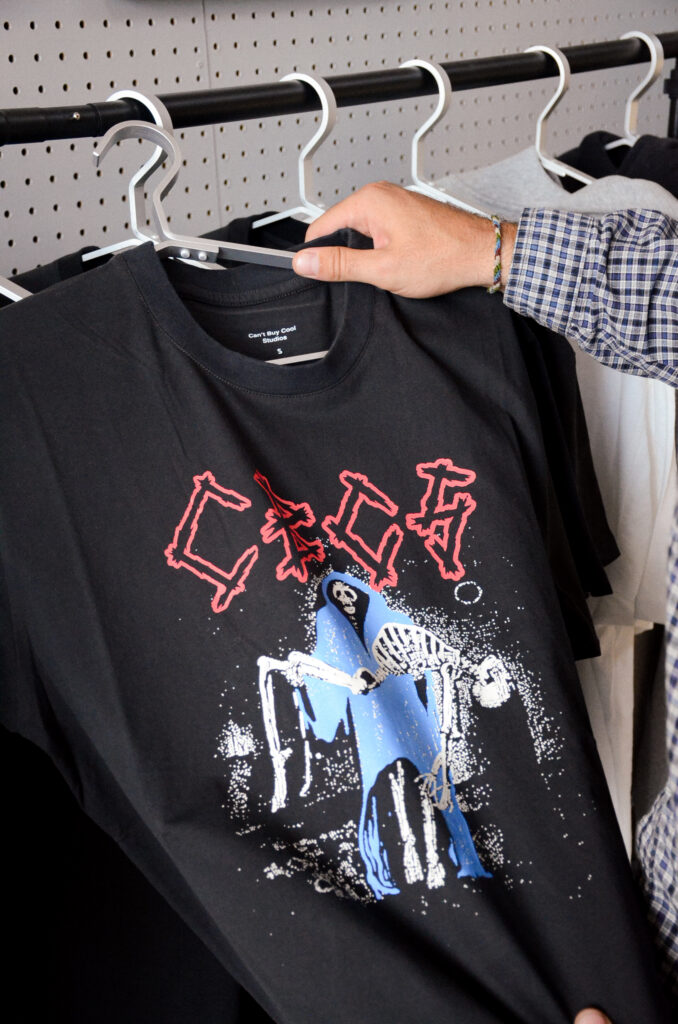
A long-time runner himself, Pascotti started Can’t Buy Cool Studios as more of a passion project than anything else. At the time, he was working full time as a producer for Arc’teryx, and, in his words, “just wanted to make some things with no intention of really commercializing it at all.”
In his free time, he drew up a design for his dream pair of running socks. Because this project was initially just for fun, Pascotti found himself able to pour intention into his design, revising the design over and over until those dream socks came to life.
“I didn’t start out with any pressure of a timeline or trying to create any particular type of thing,” Pascotti shared. “I was doing it because I loved it and wanted to, so I think I was in a position where I could get it right on the first try.”
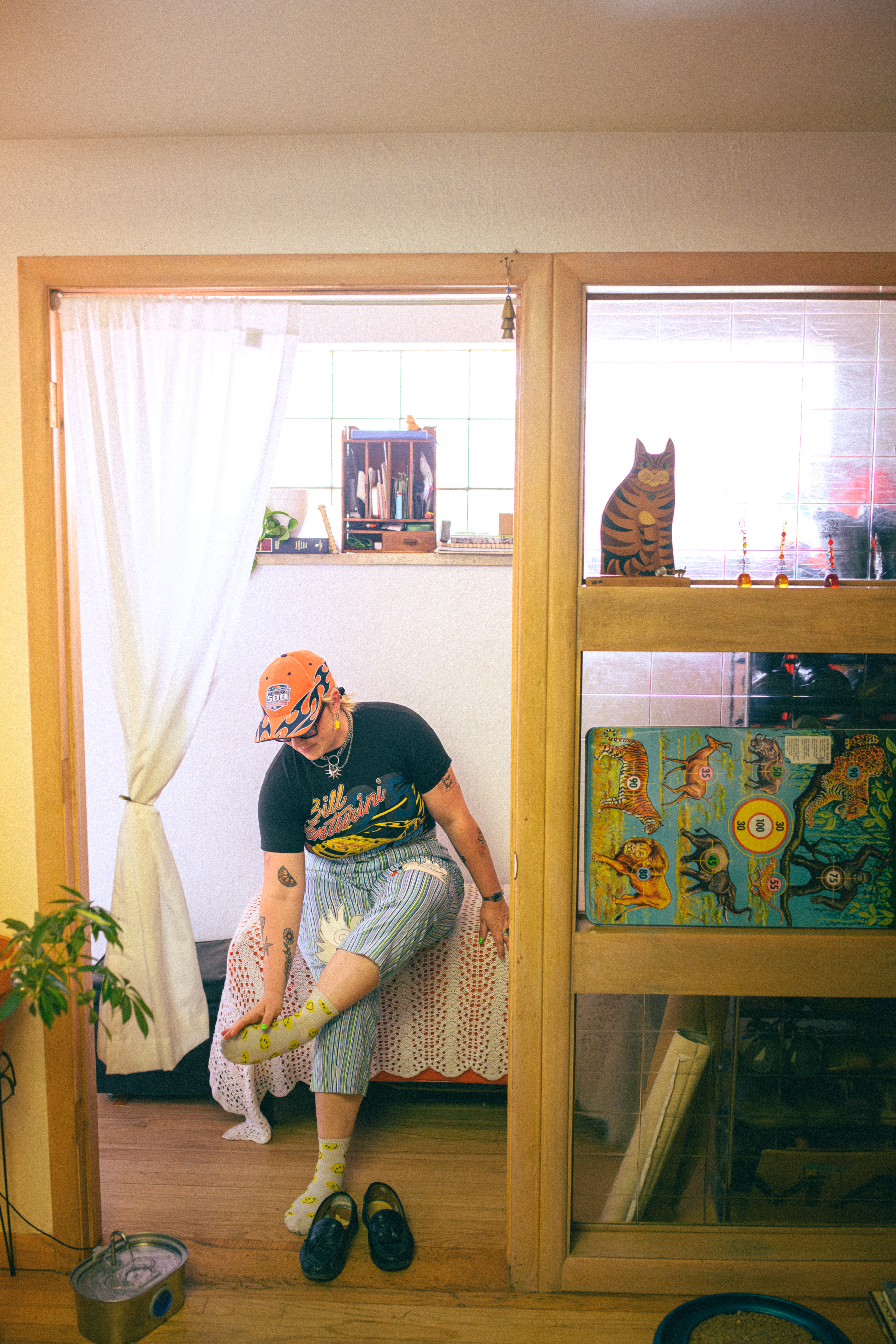
Emulating the aura of the striped cotton socks most of our dads probably played basketball in, Pascotti refined these socks for modern day performance. He did away with the sweat-sponge cotton makeup and constructed targeted zones for breathability and cushioning where they matter.
Pleasantly surprised with the outcome, Pascotti shared those socks with athletes he respected in the scene to a strong reception. And while Pascotti attributes that reception to the low-pressure environment he created in, his success represents an unspoken necessity in technical outdoor gear: solutions should be designed by those who live and breathe the problems.
A simple pair of socks for some, Pascotti’s innovative design came straight from his own experience, one he quickly found he shared with other athletes. So, although Pascotti didn’t set out to intentionally fill any holes in the outdoor gear industry, it’s that first-hand knowledge that gives Pascotti his edge, creating gear designed with performance at the center, rather than commercial gain.
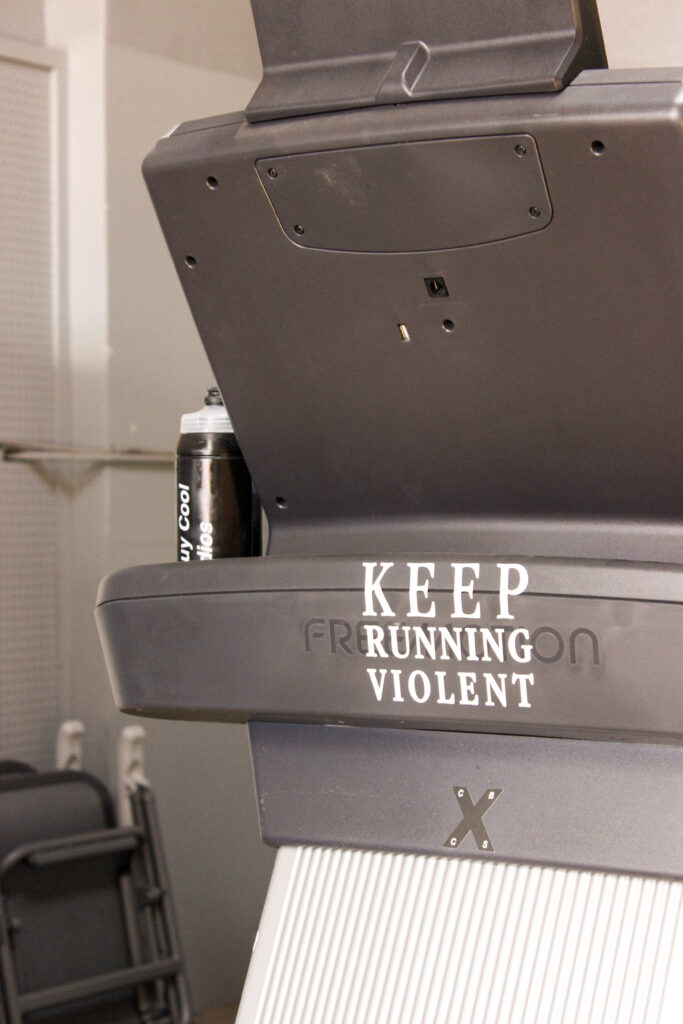
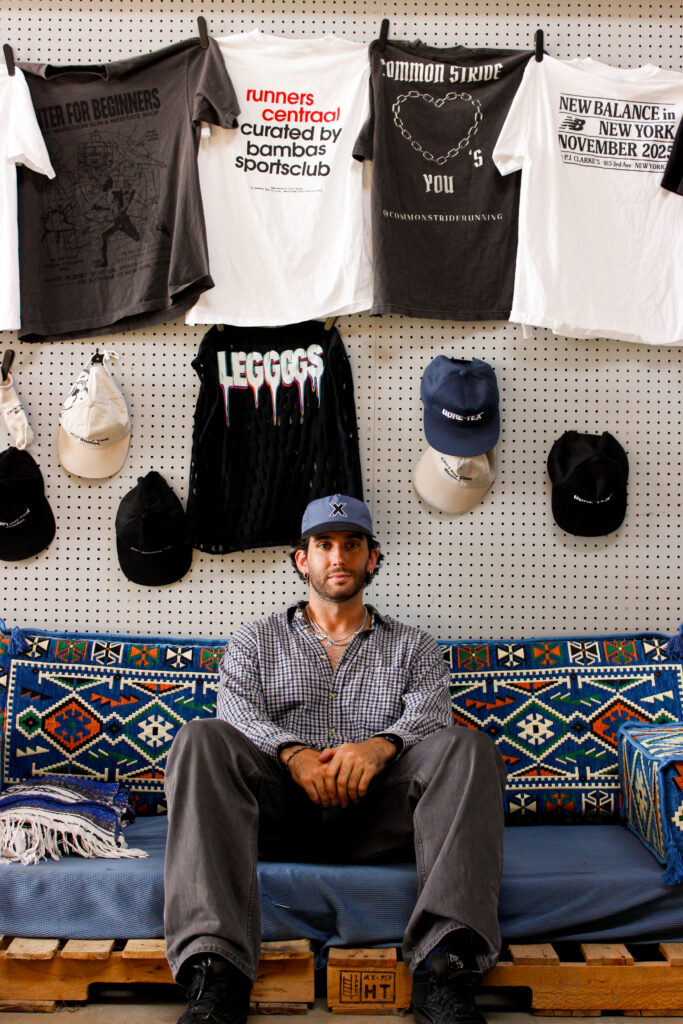
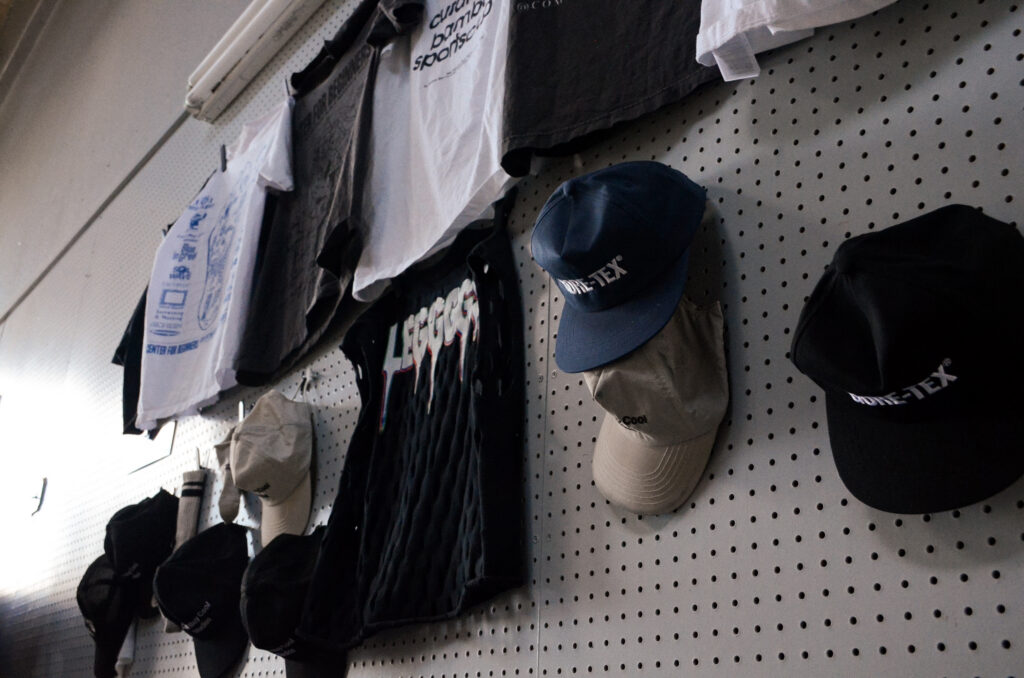
“I’m looking to just create something from my perspective, not necessarily where I can plug holes or fill voids in this space,” said Pascotti. “I think, when I am doing something authentically based on what I’ve seen in my experience, it naturally falls into that. It’s whatever feels really honest.”
Nevertheless – intentional or not – Can’t Buy Cool Studios exists in the gap few technical brands can fill. Because Pascotti is so deeply involved in every step of the process, he’s able to put innovation into practice in real time, inviting athletes in his circle to test his products and adjusting gear based on both their feedback and his own experience.
As a result, his brand stitches together the rugged spirit of small-batch outfitters with the innovation technology of bigger technical brands.
“I think that there’s a way to be able to create products that stand up or push innovation, right against those major brands, but then also have the DIY spirit of cottage brands where it’s super quick to revise products to learn from what’s going on currently,” Pascotti shared. “How can I take those insights and then also present them in a way that is at the level of standard as the biggest brands in the world and push innovation against those brands?”
In reality, Pascotti already operates within the intersection of DIY spirit and big-brand technology.
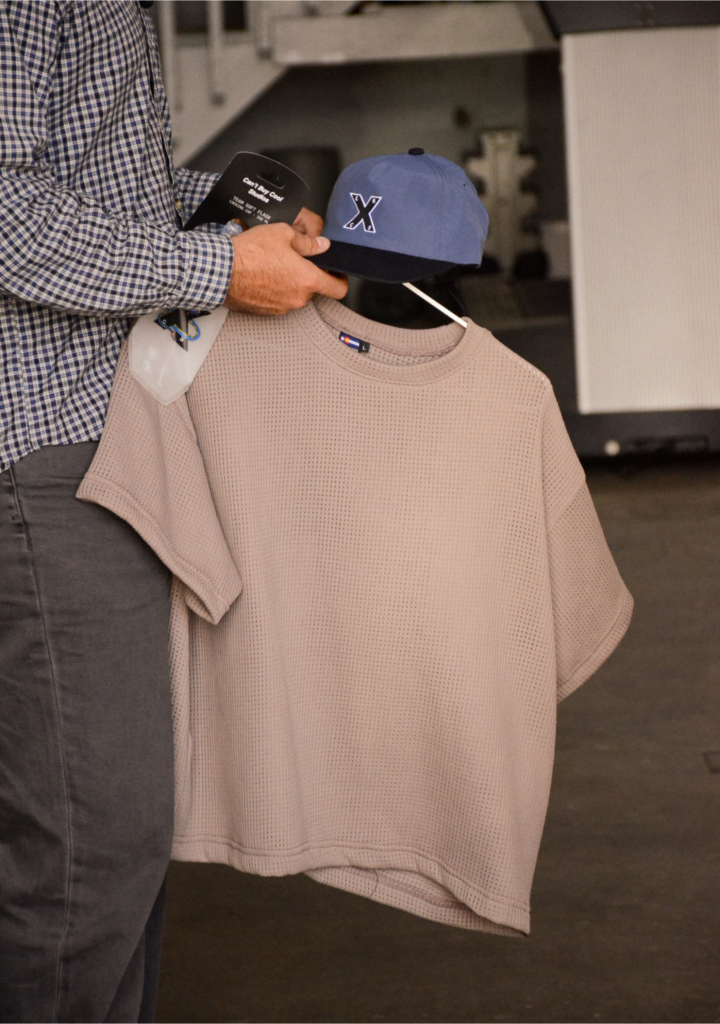
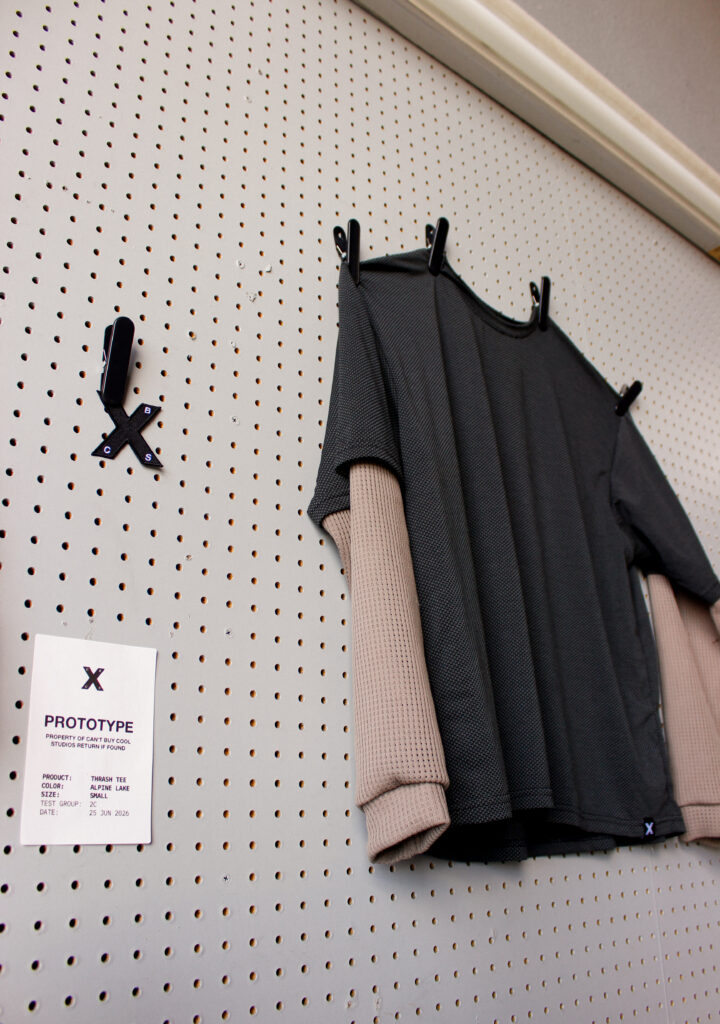
Take the Can’t Buy Cool Studios Alpine Jersey for example. Made of Polartec Powerdry Net Mesh material, the piece is deliberately designed to regulate temperature in high-altitude athletics. A true versatile piece, the military-grade material is simultaneously quick-drying and heat-trapping. Originally designed for facilitating air flow during the hottest climbs, upon testing the jersey with his friends, Pascotti quickly discovered its worth as an insulating mid-layer on cold mornings and snow-capped peaks.
On top of its innovative design, this piece symbolizes a core component of Pascotti’s creation process: the Alpine Jersey is manufactured in Aurora, Colorado, allowing Pascotti to not only create homegrown products in the truest sense of the word by supporting local business but also to have hands-on involvement in the products’ creation.
Instead of communicating with manufacturers overseas, Pascotti can drive to the warehouse in Aurora. He works directly and personally with the suppliers, feeling the fabric himself, performing firsthand tests and adjusting the products in real time.
It’s this process that helps to keep Can’t Buy Cool Studios deeply authentic.
“Inherently, I have so much connection to every aspect of the business and the product. I think really having a deep understanding of what it is that I’m making or doing is probably one of the coolest things,” said Pascotti. “I know everything about the product that I’m selling down to a textile perspective, down to the fiber.”
“I have tools in the warehouse to cut and measure the GSM of fabric samples and then to look down to an enhanced view of the actual density of the weave. That is the sort of forensic level that I’m getting to on a lot of these products.”
By maintaining this level of direct involvement in every stage of development, Pascotti ensures his production process never deviates from the level of intention he poured into that first pair of socks. After all, his brand was born from his own experience, and it’s that experience (and the experiences of other athletes in the scene) that pushes innovation and keeps Can’t Buy Cool Studios grounded in honest design.
That said, while the Alpine Jersey demonstrates Pascotti’s mastery of high-end technical design, it exists alongside products that capture a far more stripped-back ethos. Balance it against Can’t Buy Cool Studios’ Utility Gloves, for example. With a price point of just $5, these gloves are just as representative of Pascotti’s brand as his more technical products.
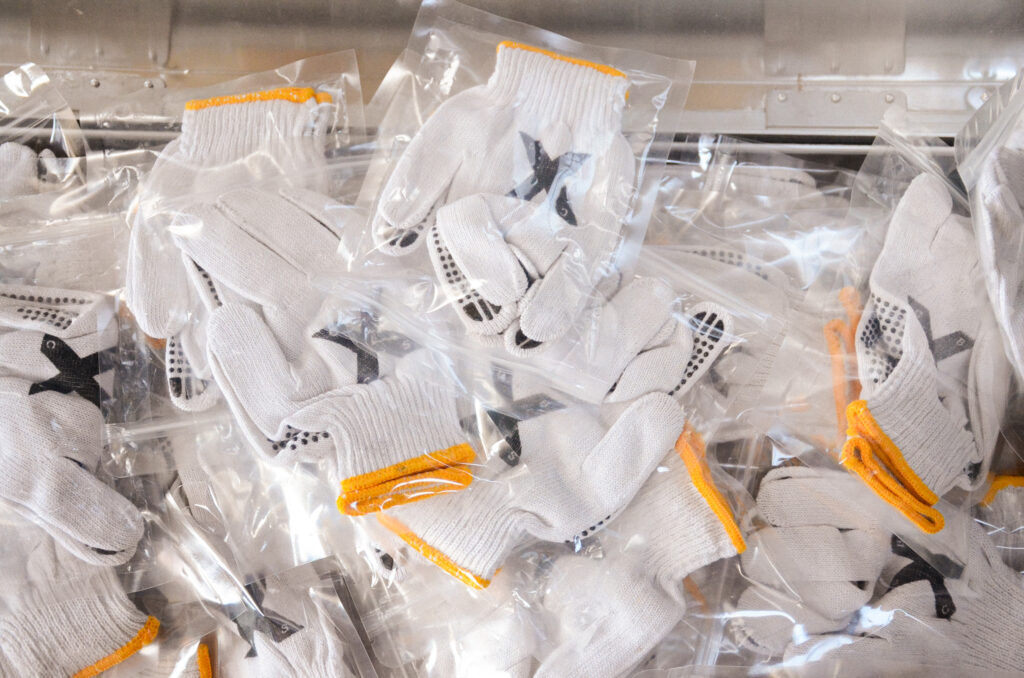
Rather than putting on airs about his gloves, his website is straightforward about the products’ simplicity: “You could grab something similar at a hardware store, yeah — but these are cheaper, tougher, and they look fuckin’ cool. End of discussion.”
The gloves are an apt symbol of Can’t Buy Cool Studios as a product of lived experience, the result of witnessing how climbers and runners choose their gear in real life, rather than head-to-toe brand loyalty. Not everything has to be the newest, most novel invention: instead, basics can remain basics.
“When you’re interacting in certain environments, not everything is the way it’s presented, as the pinnacle of technology. I’ve seen so much presented to me, would it be online or in the senior culture of all these people being head to toe in this brand or that brand,” Pascotti recalled. “And that’s just not reality. I never really knew myself or anybody that I respected in the scene to be head to toe in any particular type of brand.”
In his view, the most experienced athletes were never billboarding for a certain brand, purchasing expensive gear for the sake of the label. Rather, they leaned into comfort where they could and technical gear where it mattered most.
READ: Laura Cortez Is A Trail Runner You Can Look Up To
“They’re in some shirt, wearing an old flannel to go scramble in, but then they also have super expensive, really technical shoes. I like that juxtaposition of technical and non-technical, but there was understanding and reasoning from experience behind why all those things fit together,” Pascotti shared. “The same person who would buy really expensive shoes or a really expensive climbing harness would also be the same person who would want $5 gloves. Being somebody who needs or wants or utilizes a piece of inherently expensive gear doesn’t put you at odds with something that’s affordable.”
For Pascotti, that juxtaposition is the most authentic representation of outdoor gear. The goal isn’t to make every product as technical – or expensive – as possible but, rather, to understand when technicality actually serves the person using it. And, on the other side of the coin, when $5 gloves can exist just to “look fuckin’ cool.”
“It’s not outside of my intention to make something better expensive if it has to be that way or if that’s what the situation dictates, but if it doesn’t, I don’t want to be stuck in pushing a price point or being a premium brand where, if the situation is that a $5 glove is the best possible thing for that use case, I make a glove that’s 20X that because I’m labeling myself as a brand that makes premium outdoor products,” said Pascotti. “That was a huge inspiration for me – where can I push technical stuff where it’s necessary and when can I pull back? That, to me, seemed like a more honest conversation.”
When it comes to utility gloves, Pascotti isn’t interested in making something harder, more technical or more expensive simply because the industry says that’s what progress looks like. As with the rest of his brand, he’s guided by experience to create products that live outside of those expectations in the space where demand becomes supply.
In the film he produced with Arc’teryx, Pascotti watched Hayes and Kaplan push their bodies through more than 100 miles of running, climbing and mountaineering, an experience that could only be understood by the people actually doing it. In that way, “To and From,” has a fitting place in his portfolio as a producer whose own experience as an athlete has become inseparable from the products he makes.
The same instinct that sent Hayes and Kaplan toward Long’s Peak runs through Can’t Buy Cool Studios. Pascotti doesn’t design gear from a distance. He adds them to his closet, runs in them, climbs in them, tests them with his friends and carries those experiences back to his warehouse into the design process. Sometimes that means engineering a textile down to its fibers, and, other times, it means leaving a $5 glove exactly as it is.
Now, as Can’t Buy Cool Studios grows, he remains committed to moving without expectations, innovating when problems arise, creating from experience and allowing his brand to shape itself into whatever it needs to be. In that space between novel invention and DIY problem-solving, Pascotti creates with yet another thing you just can’t buy: authenticity.
All photos by Emily Rodz.