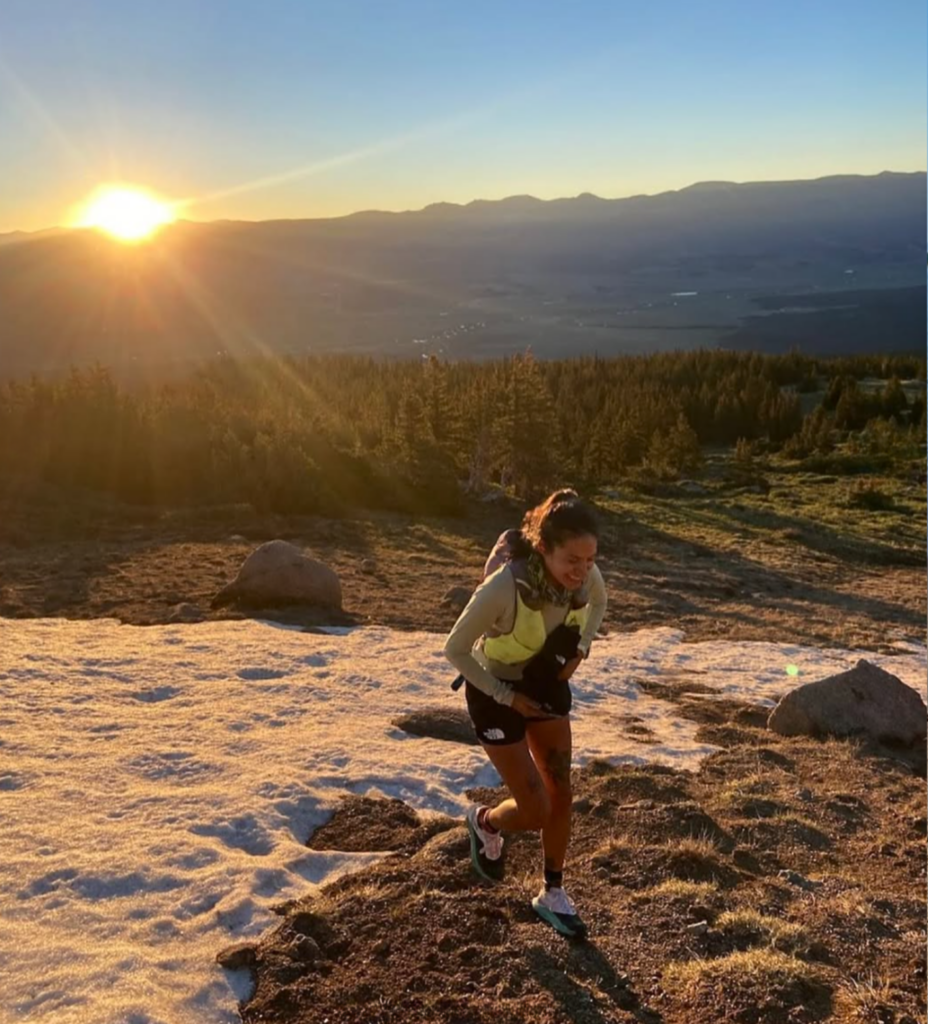
In just a little over two weeks, Laura Cortez will cross the finish line of her first 100-mile race. She’ll have climbed over 23,000 feet of vertical gain, reaching over 13,000 feet above sea level. She’ll have run through the Sawatch Range of the Rockies, crossed over the Continental Divide through two ghost towns and pushed her endurance to a limit few humans are comfortable reaching.
Though the High Lonesome 100 is her first 100-miler, she’s raced for most of her life. And while Cortez doesn’t view herself as a high-mileage runner (which she defines as 70 miles or more a week), her skill is undeniable: since 2018, she’s earned eight podium spots across just 21 races, holds two course records and, since 2022, hasn’t pulled a rank percentage lower than 92%.
In other words, when Cortez does choose to race, she doesn’t mess around.
With High Lonesome just around the corner, her weekly mileage isn’t her only focus. A firm believer that “how you do one thing is how you do everything,” Cortez is using this opportunity to strengthen her mindset, refuse to cut corners and pay respect to the able-bodied privilege of climbing mountains and running for hours (if not a full day or two).
This privilege feels precious, as, like everything in this world, Cortez’s running history hasn’t been all smiles and endorphin rushes. In reality, in the nearly two decades that Cortez has been running, the priceless relationships and experiences are balanced by deep loss and hollow DEI initiatives that shaped her perspective toward her sport.
Now, she isn’t running for trophies or brand deals. Finally, Laura Cortez is running for herself.
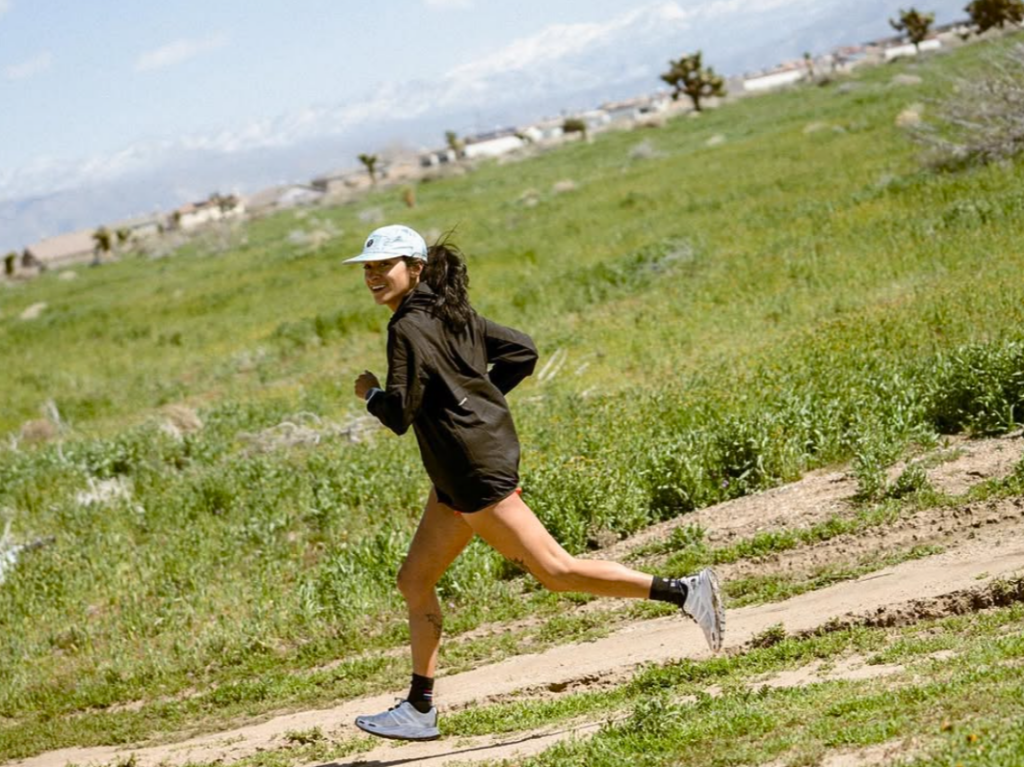
That’s not to say that Cortez doesn’t love the sport. Rather, running has provided her with community since she was about 14 years old. With her high school’s soccer and running coaches, as she described it, “in cahoots,” Cortez found camaraderie beside the same teammates all year long. After an injury prevented her from continuing soccer, she fell into a similar dynamic through college running, walking on to the North Texas cross country and track teams and discovering community there.
After graduation, that pattern continued everywhere she went: her hometown in San Antonio, Portland and – most recently – Denver and Salida, Colorado.
“It’s become one of those things where I’ve just done it my whole life. I don’t know how to make friends without it,” Cortez joked.
When she moved to Denver in 2018, an errand to find running shoes resulted in an invitation that altered the trajectory of the next eight years of her life. She ended up at Berkeley Park Running Company (BPRunCo), and met Philip Snyder, the anchor owner of the shop and Cortez’s first link to the Denver running community.
“I went there once to get shoes from Phil. He invited me to run club, and then I went every single Thursday after that,” Cortez recalled.
As Thursday nights turned to late nights at (what used to be) Local 46 next door and weekend runs, then birthdays and holidays, the relationships she made at the Berkeley Park run club quickly became Cortez’s main circle of community. Now, her BPRunCo cohort remains her support system: yes, socially, but also in the real-time support she’ll receive during High Lonesome, helping her keep pace and providing her fuel and encouragement at aid stations throughout the ultra-marathon.
It’s also through these connections that Cortez began making vital changes to Denver running. Alongside fellow ultra-runner Victor Fallon, Cortez started Trailtinos in 2020, a Latine/x/hispanic-centered trail running group that encourages getting outside and exploring nature just as much as it encourages running.
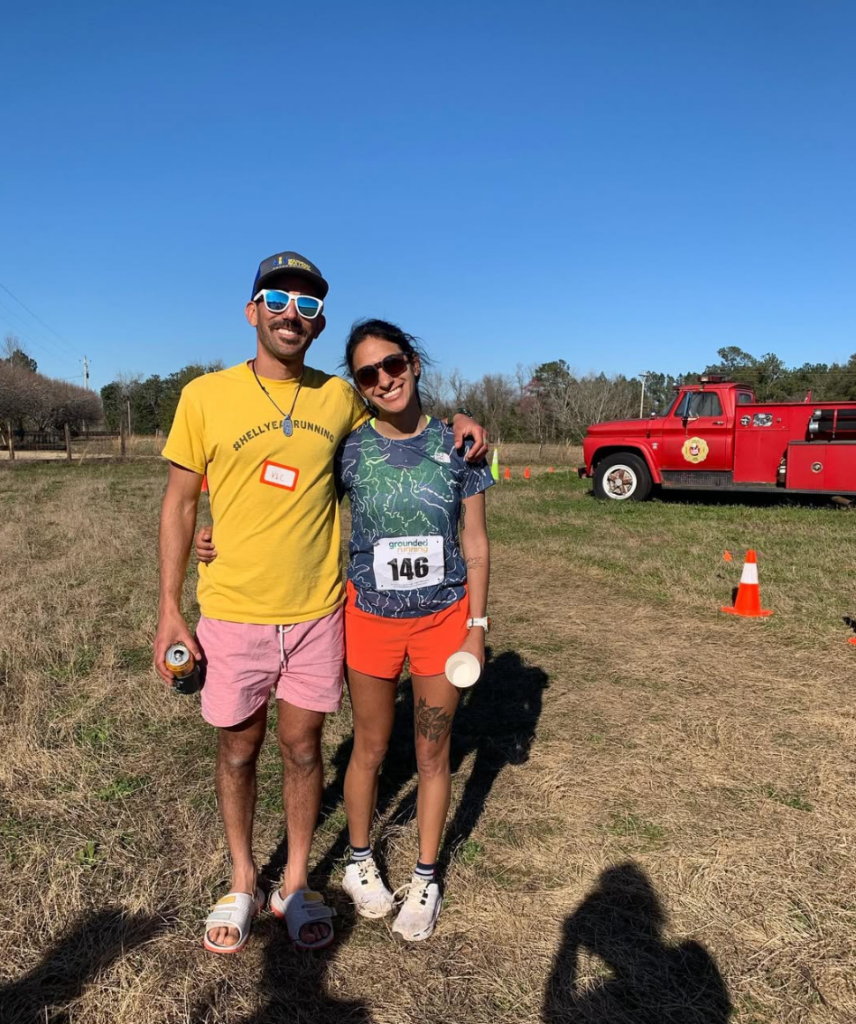
In creating Trailtinos, Cortez and Fallon drew on motivation from their own experiences, seeking to create a space for individuals who have often been left out of the mainstream conversation, on the receiving end of discrimination ranging from micro-aggressions to overt racism. In a previous interview with iRunFar, Cortez recalled Fallon asking her: “When you go to a race for the first time or you go back to that event the following year, do those people recognize you? Or do they confuse you for other Brown people?”
Trailtinos was their answer: a place for Latine/x and Hispanic runners to define their goals and experiences for themselves, explore nature and rest assured they won’t be seen as just another Brown person.
“Victor and I would talk about being the only people of color there a lot,” Cortez shared. “There was a huge push for, ‘we want to go to trails, see the mountains.’ A lot of people who lived in Colorado and Denver their whole lives have never been out to a trail because of fear and misinformation and because they’ve never been exposed to that.”
As Trailtinos grew, Cortez witnessed the club encourage the same connection she gained through running. The next year, she started Run Wild Trail Camp with Meredith Merkley. Through this summer camp, Cortez and Merkley continued work toward reducing the racial equity gap in outdoor sports by encouraging kids to feel confident in the space and unlearn the societal narrative that they must look a specific way or come from a specific background to be there.
After all, trail running is a prime example of that racial equity gap. Early on, Cortez learned that societal narrative herself: comparing her body to the super thin elite runners who she and her teammates looked up to. Noticing that those elite women only looked like her to a certain point. Holding down the role of afterthought in the sport as she watched major brands stop the diversity initiative at “white woman.”
And Cortez’s experience isn’t uncommon. According to the American Trail Running Association’s Spring 2025 Trail Runner Survey, 83% of trail runners are white, with Hispanic or Latine/x runners being the second-most populated at only 3%. Similarly, 60% of trail runners earn a yearly income over $81,000, and, according to RunSignUp’s 2025 Ultramarathon Statistics, 66.7% identify as male.
On paper, running should be an incredibly accessible sport. After all, on this planet, no one should be more entitled to Mother Nature’s gifts than others. However, these statistics point toward an entirely opposite conclusion: the majority of athletes in the sport are white, male and affluent (even after oscillating pushes for diversity, equity and inclusion by major technical brands).
“Especially in the trail world, there’s this huge push in narrative of ‘oh, we want to make the sport more diverse, which, of course, yes. But it stops at a certain point,” Cortez shared.
“The example that’s been so current is ‘more women in sport.’ Great. But who is that? Are they brown, black or Indigenous? No. You’ve got your white woman in there and great, we’ve done it. That’s where this push for diversity ends. They do that, and then the conversation shifts to ‘how do we put black and brown women in there?’ continuing to have us be an afterthought. So things will keep being created without any other community in mind, which keeps the narrative as it is.”
Cortez is referencing decades of systemic gatekeeping, yes, but she’s also informed by her own experiences. After a few deals left her feeling disappointed, disrespected and tokenized, Cortez’s perspective on working with brands has shifted, knowing both that the sport is expensive, requiring many runners to seek financial support to grow as athletes – and approaching future deals with well-earned skepticism.
“I don’t know what it would take to feel comfortable with a brand. When I was going through it, that was also the height of DEI. Essentially, I had brands tell me, ‘Oh, we want diversity,’ and I’m like, ‘I’m not selling that.’ Or they’d say, ‘We’re not looking for a diversity athlete right now,’ and I’d say, ‘I wasn’t offering that,’” Cortez shared. “I see people working twice as hard to earn a deal, and the diversity stays the same: woman in sport.”
After living the consequences of systemic privilege for too long, Cortez is taking a break from brand deals. Now, she approaches her sport for herself. She’s running to celebrate her own privilege: the able-bodied gift of a strong, capable body,
Cortez’s father, Richard, was an athlete for much of his life. When he was diagnosed with cancer in Cortez’s early 20’s and lost the ability to play like he once could, she vowed to never again take her body’s capability for granted.
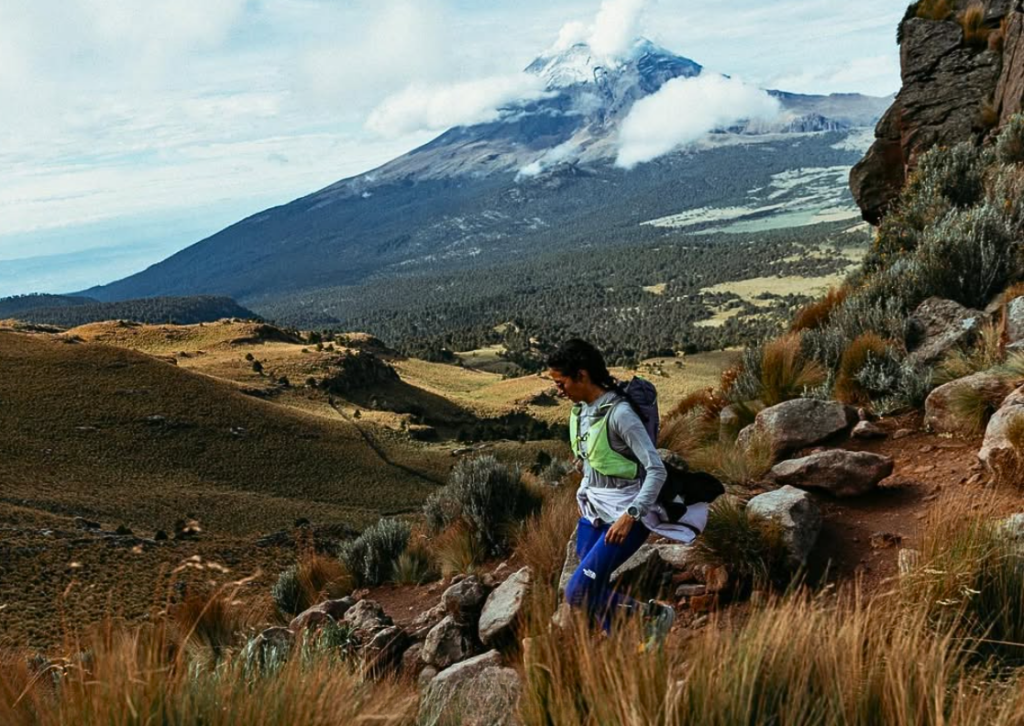
When he passed in November 2022, this vow took Cortez to Mexico to connect with her and her dad’s shared heritage. In 2023, she traveled to Amecameca, an historic mountain town at the foot of the Popocatépetl and Iztaccíhuatl volcanoes.
“I don’t remember how old I was, but when I started asking my dad about where his family was from, he would talk about the volcanoes,” Cortez recalled. “Growing up, we were never even allowed to think about going to Mexico, because of drugs, crime, the cartel, all these typical fear-mongering stereotypes. But once I started to get better at running, I realized I could possibly have a chance to actually hike these [volcanoes] one day.”
With support from The North Face as a member of the brand’s Athlete Development Program, Cortez did just that, developing a short film, “Izta,” that documented her attempt to summit the Iztaccíhuatl volcano.
According to Indigenous legend, Iztaccíhuatl was an Aztec princess in love with a warrior in her father’s army, Popocatépetl (El Popo). After being falsely told that Popocatépetl was killed in battle, Iztaccíhuatl perished from her grief. When Popocatépetl returned and found her, he begged the gods to save her. The gods turned the pair into volcanoes as a tribute to their immortal love, and while Popocatépetl remains an active volcano, Iztaccíhuatl lies peacefully and eternally asleep.
As such, Cortez’s film begins: “Dressed in white, Iztaccíhuatl may be asleep, but she invites us to daydream.”
In practice, Cortez’s motivation came less from daydreaming and more from remembering, paying respect to Indigenous Mexican ceremony and raising awareness to how human behavior has impacted the historic volcanoes.
“It’s not about the run. It’s about the volcano, what it means and what it represents, what it gives to people. All around Mexico, there is a huge population who still speak all the indigenous languages, and Iztaccíhuatl and El Papo are from that indigenous language,” said Cortez. “And Izta, she used to have, I think, close to the most glaciers on a volcano in the country, and I think now she’s down to maybe one. One, Ayoloco, went extinct in the last few years.”
To pay tribute to Izta and raise awareness toward her glacial loss, Cortez planned to summit the volcano by way of the ancient water route to learn more about the crisis and how the water gets brought down into Amecameca. Before she began her ascent, she left flowers at the base of Iztaccíhuatl, asking her ancestors for safe passage and to watch over her that day.
Instead, Cortez felt the film’s narrative shifting. Filmed just a year after her father passed, Cortez’s ability to process her true emotions was somewhat hindered by the camera, finding herself carefully choosing her words and unable to stay as present as she otherwise would have.
And perhaps her ancestors recognized this discomfort. During her ascent, Cortez missed a turn on the trail, and, when she found her crew again, the weather conditions were too dangerous to proceed. An incredible feat nonetheless, this twist in fate could have been happenstance – or it may have been Cortez’s ancestors answering her tribute: pushing her to recognize her individual strength. Reminding her through tough love that she deserves to take this route when she’s able to be present, unencumbered by audience eyes and a major brand’s guiding hand.
Since the film wrapped, Cortez has summited Iztaccíhuatl via the traditional city summit route, with plans to return to the water route in the future. Looking back now three years later, she holds gratitude for the film’s impact even beyond her personal experience.
“After the film came out, I got a lot of DMs from people who had a similar upbringing, not being allowed to go to Mexico or always wanted to reconnect but felt like they were too old,” said Cortez. “Saying thank you for shining more of a light on that community, how lovely everyone really is and can be and not framing it as such a cartel-ridden space. Mexico definitely does not get the light it deserves.”
These messages proved that Cortez did achieve her goal of remembering, of raising awareness to the beauty and ritual within Indigenous Mexican culture. And she’s equally hopeful that her film has just as much impact on an individual level, giving young women who look like her someone to look up to, to know they’re not alone when they navigate similar struggles.
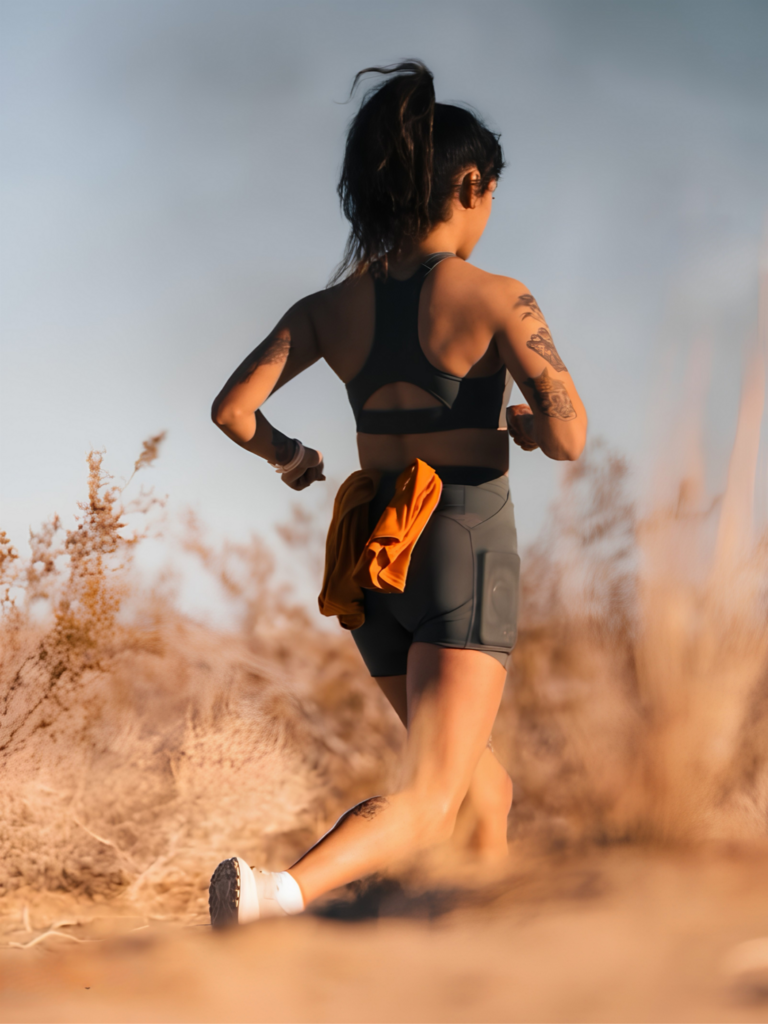
“Being in this sport, I didn’t have anyone to reference who looked like me or who even had a similar body to me,” Cortez shared. “I didn’t have that representation growing up, and knowing that I do have the capacity to be that for anyone younger than me really means a lot to me. Just giving someone a reference point to say ‘Oh, they’re connecting with things that they love and nature and their family,’ and maybe giving them some sort of permission.”
“I think even just being on The North Face team for a little while, I’m hoping that may have reached the right person who was like, ‘Oh, I could do that.’”
Looking ahead to her first 100-miler, Cortez hopes to keep turning her experiences into a roadmap for others, and this time, she’s doing it on her terms.
With a residency in Salida and a part-time barista job providing authentic connection and simple joys, Cortez approaches it all with a new, hard-earned sense of presence. She’s looking forward to a return to a “dirt bag running scene,” where athletes start rejecting sponsorships to disrupt racing fees and infuse play and connection back into the sport.
She’s not seeking permission to take up space, and in doing so, she’s helping the next generations of runners feel entitled to that permission, too. She’s doing her best to ensure they no longer have to look for someone who looks like them, because they will have already found her.
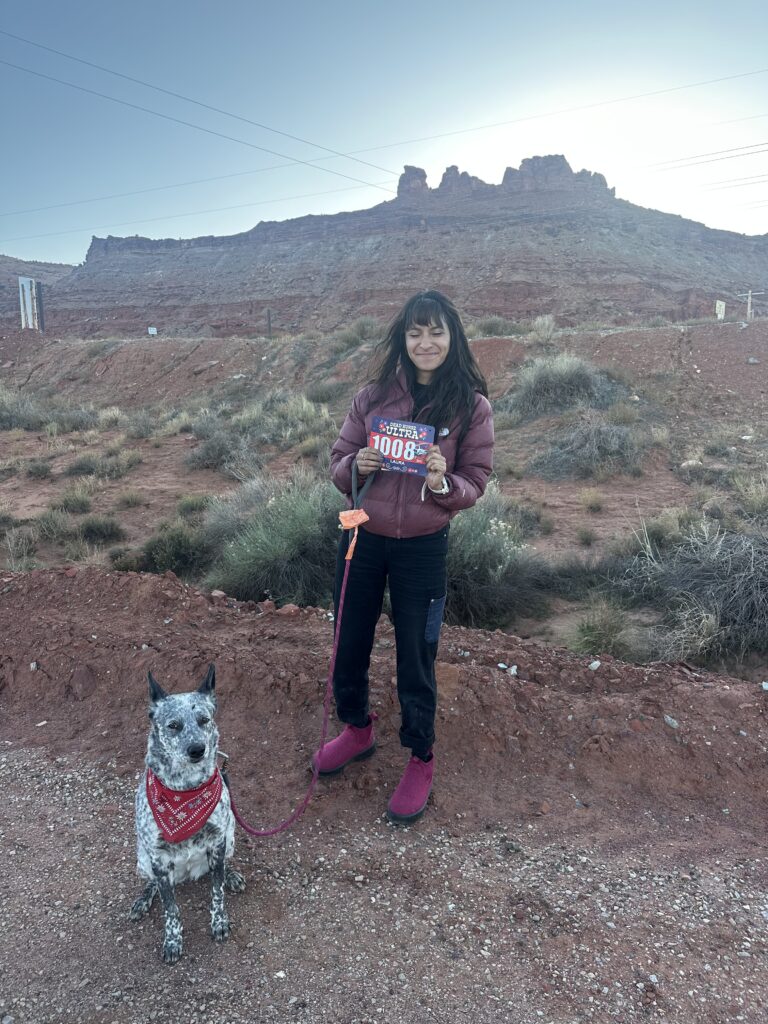
But when it comes to daily life, Cortez moves humbly. Speaking with her, she doesn’t let on that she already holds tremendous power as a role model, that the kids at Run Wild and the young women watching “Izta,” are likely already a little better prepared to face the sport’s challenges. She looks forward to more positive change.
When asked about how she’s mentally preparing for the race, she chews thoughtfully on a coffee shop pastry and answers dryly: “In my brain? I pat myself on the back and say, ‘It’s all right. Keep going.’”
Maybe that’s the real lesson here: to follow our moral compasses, appreciate everything our bodies can do and offer ourselves kindness – without taking it all too seriously. And as long as we have Cortez to keep reminding us of that lesson, running may just be capable of change after all.