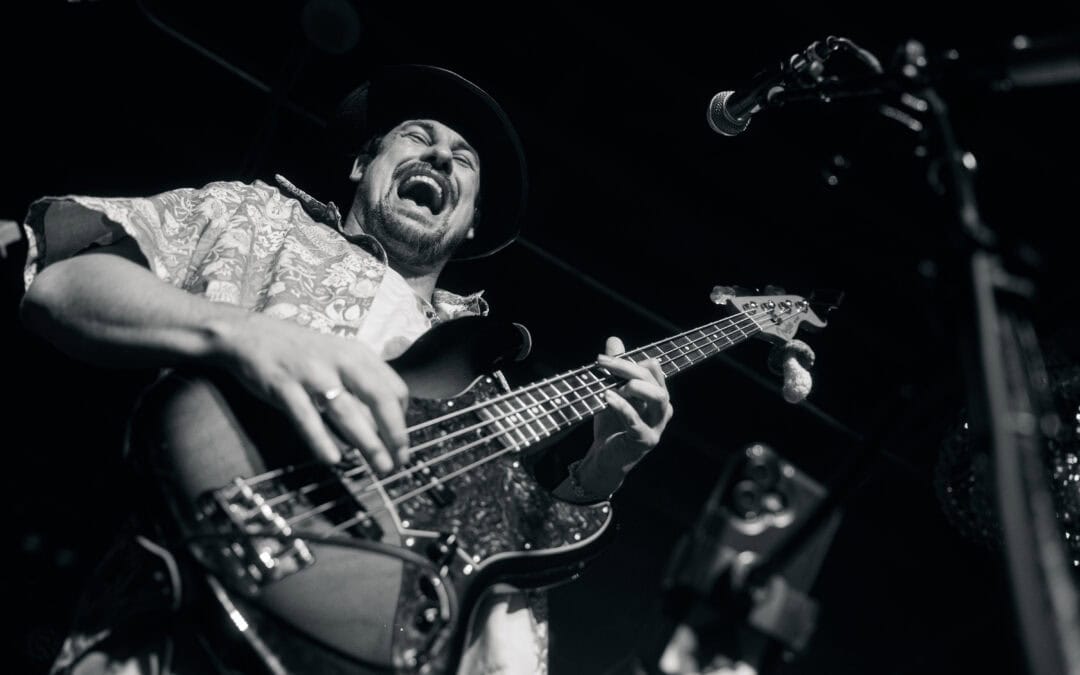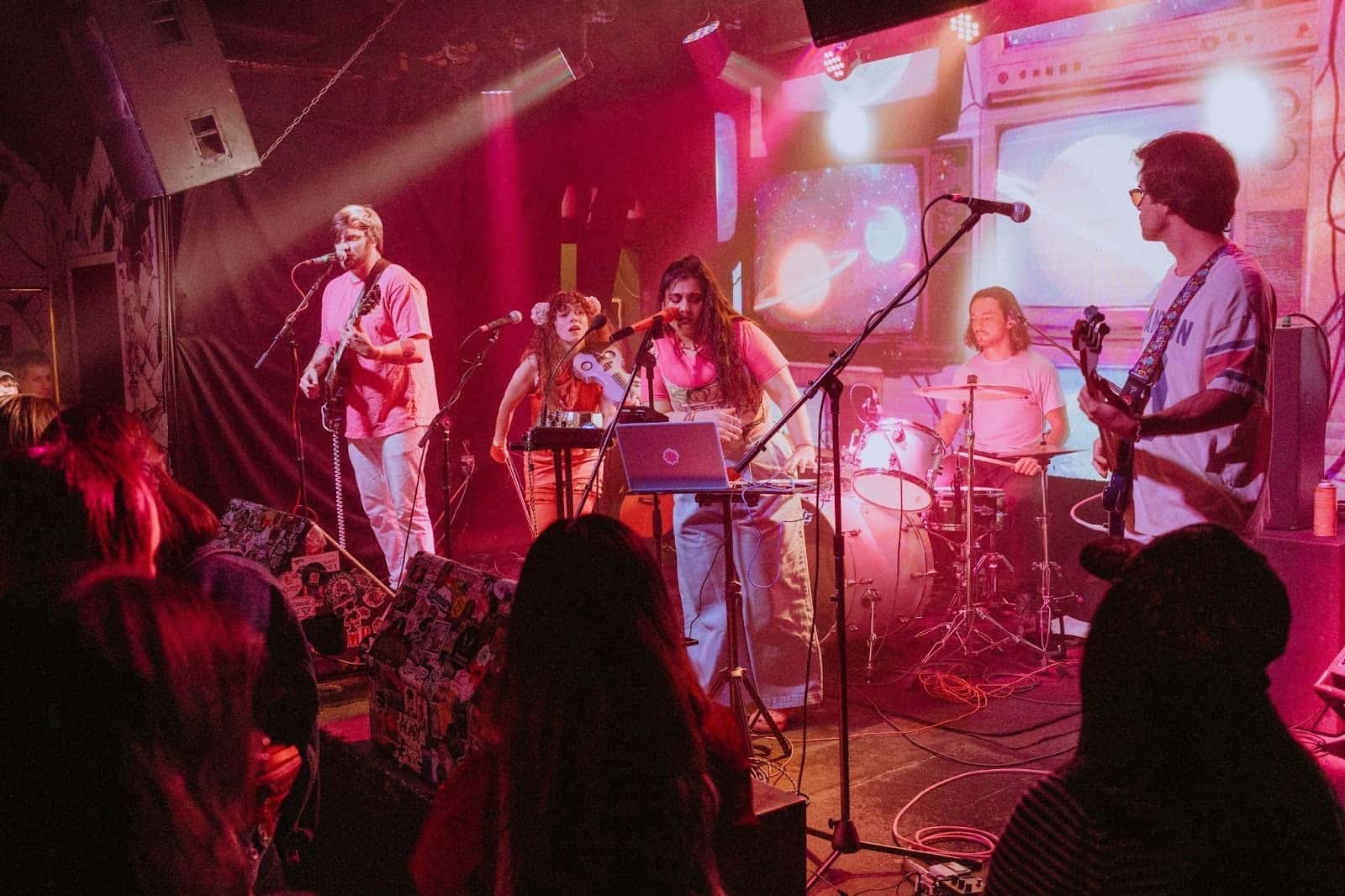
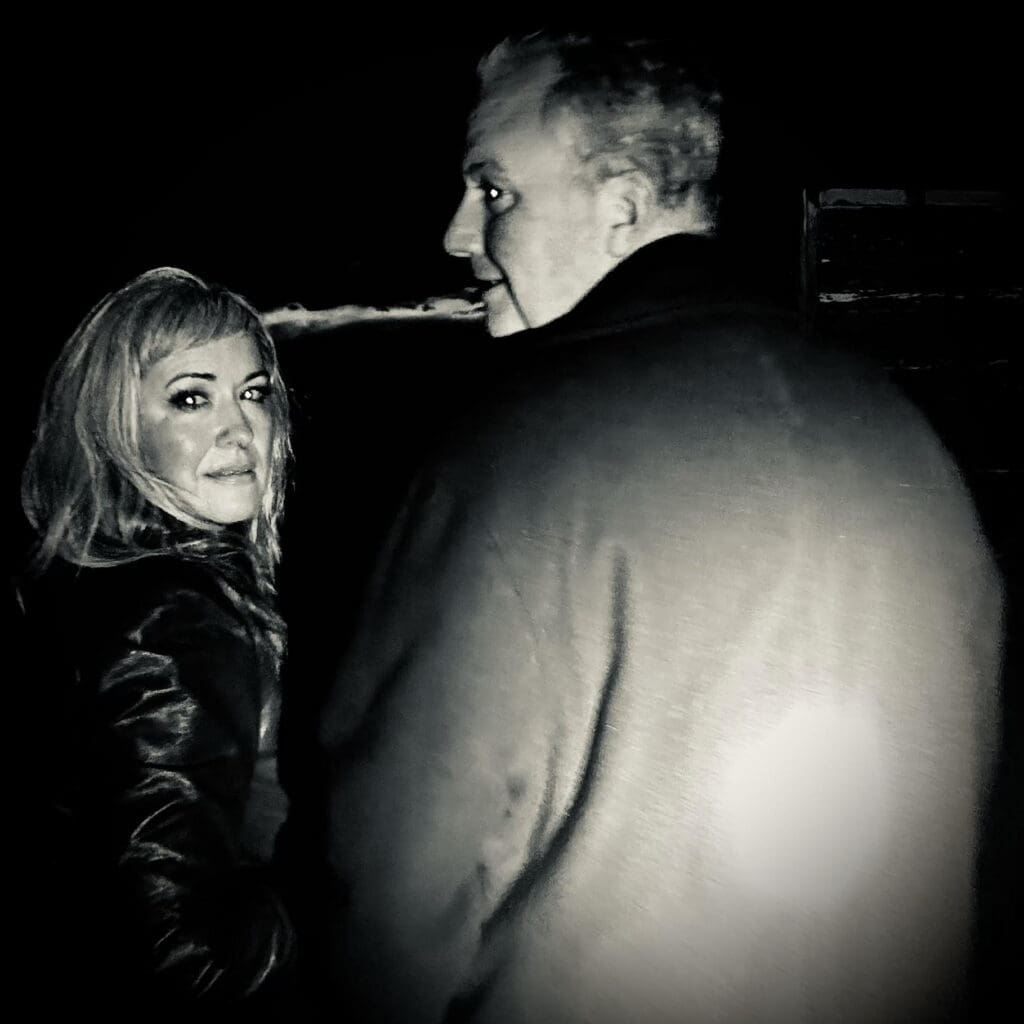
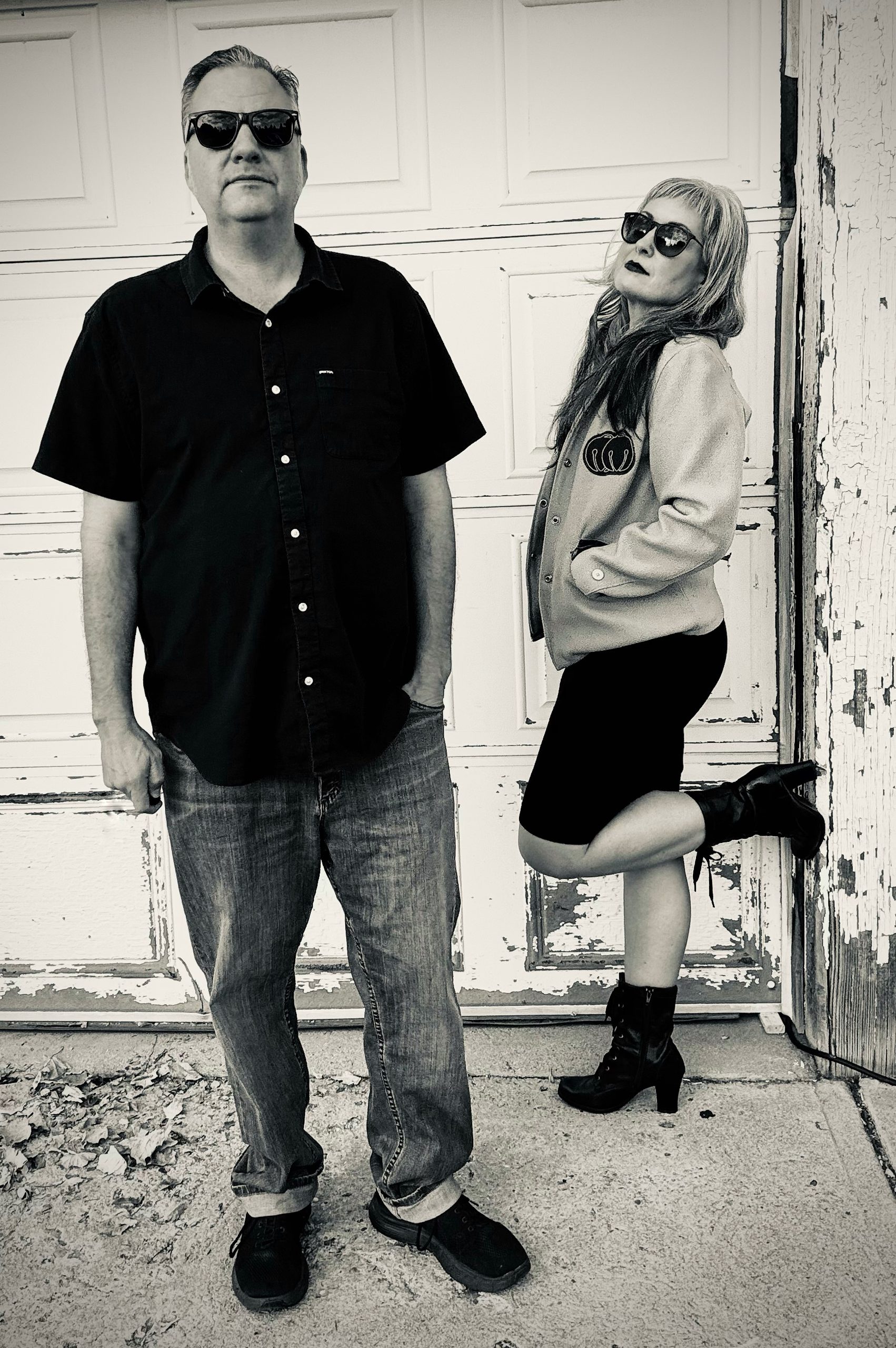
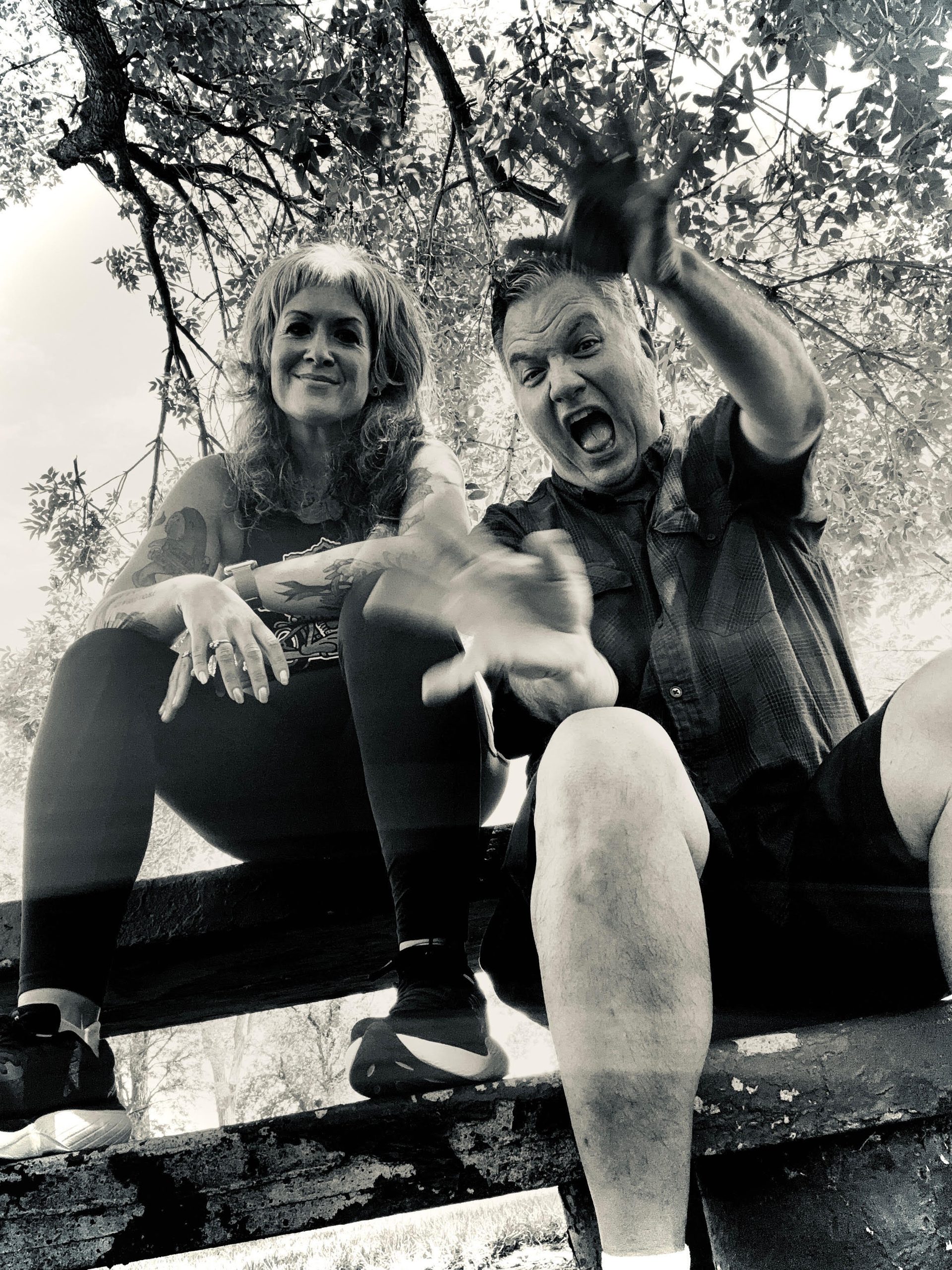
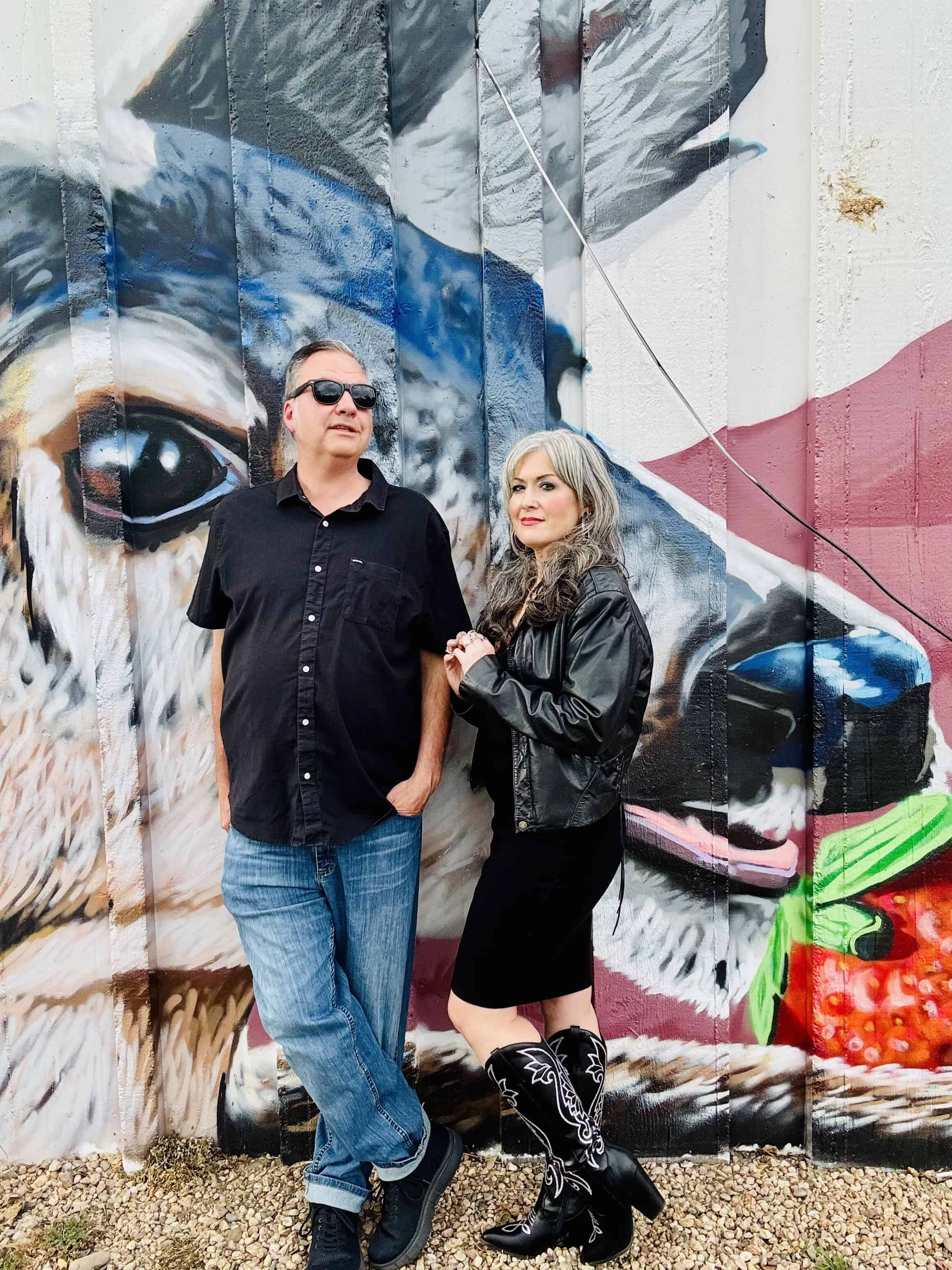
Local cow-punk garage country band White Rose Motor Oil makes music that rails against the patriarchal systems of oppression put in place by our current administration by writing songs that tell stories of dangerous women seeking vengeance, murderous men getting comeuppance, the safety of finding real love and how rare that can be in this day and age. Composed of married duo Eryn DeSomer and Keith Hoerig-DeSomer, White Rose Motor Oil’s music is raw and angry, melding old school country meanness with more modern punk sensibilities to create a sound that makes those who hear it ready to fight the good fight. It’s rage become art, middle fingers to the assholes in power put to music. It’s the kind of music we need in this day and age, the kind that refuses to bow or break. Their latest album SPIDER is releasing this Saturday, October 31st, Halloween day and as the midterm elections approach, it couldn’t come at a better time.
Denver Dive spoke with Eryn and Keith about their the album, how playing in bands in Denver led to White Rose Motor Oil, the inevitable anger that comes from living in our current political climate, channeling emotion into art and much more.
READ: Gabe Mintz and the Sparrows Make Their Debut with First Single “Colfax Swamp Blues”
Denver Dive: Hey y’all, thanks for taking the time! How’s it going?
Eryn DeSomer: Hey! We’re doing great. Just got off work.
Keith Hoerig-Desomer: Hey Thomas! Yeah, we’re just wrapping up for the day. Thanks for doing this!
DD: I’m slowing down myself! Well, I don’t want to take up too much of your time. I usually like to start these off by taking it as far back in the day as we can, to the early days of when you remember first becoming interested in music. Do you have any memories or albums or shows or experiences that really stood out to you growing up? What made you fall in love with music?
KHD: Okay, I’ll go first. Man, that goes back really far. Honestly, it was Sesame Street. I didn’t realize this at the time, but the “Pinball Number Count” song is The Pointer Sisters. But then from there, I had this little Mickey Mouse record player, like literally Mickey Mouse. I remember, I think for a birthday, I asked for a slightly better record player. I started getting Spider-Man records and stuff. And I started making tapes off the radio like kids did back in the day. I would tape classic rock. I would tape the Beatles, Rolling Stones, stuff like that. First record I bought with my own money was Michael Jackson’s Thriller. I bought it on the same day as “Pac Man Fever.” Not long after that, I bought Asia’s first record.
Those were some some really really early records. I then started to get into New Wave. But then also not long after that, actually because I was growing up in a Christian household, started getting into a lot of Christian heavy metal but also listening to a lot of like Metallica and Anthrax and stuff like that at the same time.
DD: I relate to a lot of that. I personally didn’t know The Pointer Sisters made music for Sesame Street but I had a similar realization when I realized that Ween was doing a lot of the SpongeBob music. There’s something to be said about bands making music for the things you watched as a kid almost making you poised to grow up listening to certain kinds of music. I also grew up in a rather Christian household and found an outlet through a lot of Christian screamo and stuff like that growing up as well. Eryn, do you have anything you’d like to say?
ED: So mine isn’t nearly as cool. I also grew up in a really religious household and we weren’t really allowed to listen to anything cool. But we we the the first memories that I have of like choosing my own music was I two things? One, my first tape that I ever bought was Paul Abdul and I can’t remember what the name of it. It’s the one with “Forever your girl”.
DD: Is that the one with the dancing cat?
ED: Oh, yeah. That was definitely on there. That’s a real banger. And then the other thing that I remember that was a huge influence on me because, again, we weren’t really allowed to listen to whatever we wanted to, was discovering Dr. Demento and listening to Dr. Demento on my Walkman at night when my parents had gone to bed and they had no idea that I was listening to that.
KHD: That’s something for both of us, Dr. Demento, and especially Weird Al.
ED: Anything that was on that show. I don’t even remember Weird Al being on it. I’m sure he was, but I just remember it being like, “Oh, music can be creepy and weird and jarring.” “Fish Heads” (by Barnes and Barnes) was my favorite. I loved the “Fish Head” song. Then I went into my like like 90s country phase. I grew up very rural so I had to listen to a lot of 90s country. But that was my gateway into like when I was like 15, and again in small town in Western Washington, discovering like hip hop, like a lot of like Warren G and like Dr. Dre stuff. We were the whitest kids you ever saw and it was all these girls like singing along to “Regulate”.
This was the mid ’90s, and I just remember being I felt like I was so cool because I’m listening to this and y’all can keep your country.
DD: I totally get that. I grew up in Tennessee but it wasn’t until later in life that I really started to appreciate country music. I grew up around a lot of the country music that I don’t vibe with still, like the stadium stuff has never done anything for me. But there’s there’s still some great country out there. But back in the day, growing up around it, I was like, “No, I listen to punk rock and metal and Biggie and Tupac. I don’t want any of your country shit.” We had no business driving around bumping as much 90s hip-hop in the late 2000s in suburban Tennessee as we did but that’s all there really was to do. That and play music. When did you guys start start playing? Keith, when did you get behind a kit? When did you pick up a guitar, Eryn?
ED: We’ve been playing music together since 2000. Well, since we met pretty much. We actually met at this church in Denver that doesn’t exist any longer, called Scum of the Earth. It was pretty liberal and pretty open-minded. It was started by his old band. The whole point was to be really open and welcoming to all sorts of people. And neither one of us is churchy or religious any longer. Not even a little bit. But that’s where we met, and so we were both doing the music for the church. It didn’t have to be like your traditional church music at all. It was all over the place. We performed Townes Van Zandt songs and Bruce Springsteen songs, stuff like that. [Keith] would play play bass for me and I would play piano. That’s how we got started.
We started our first band together in 2006, which was The Hollyfelds. It was mostly country, but like kind of old school country. We’ve been playing together ever since. But as far as picking up the guitar and drums, I started playing guitar with The Hollyfelds. So in like 2013, 2014. I kind of knew how to do it before that. But I learned most of my guitar playing on a tenor guitar, which is a smaller, just a four-string guitar, because I really wanted to be off of keyboards. It was too heavy to haul around. And then when we started this project, Keith moved from bass. He was like, “I don’t want to be in like a gentle, like bass and guitar band. I want to have some energy.” I agreed and he said he’d buy some drums.
KHD: I bought a really cheap kit, and and to be fair, I had the head start of being in three previous bands with three really good drummers. So I learned from watching.
ED: Yeah, and same with guitars. I was playing with amazing, amazing musicians, and then I’m like, “Oh, I don’t even have to do anything.”
DD: That’s awesome. Like learning on the fly, like learning as you like figure out your sound as well. When did the the White Rose Motor Oil project itself come about? It sounds like it spawned out of these other bands and other projects you were working on. But tell me about when you decided to actually start and sit down and work on the project.
ED: I think that was in like late 2017. So we had kind of gone through some hard things. Both of our dogs died in 2017.
DD: Oh, man. I’m so sorry to hear that.
ED: Yeah, we had two really great dogs. They were two basset hounds and they both passed away. I had been doing some solo stuff but we didn’t really have anything musical going on. Both of our other bands had split up.
KHD: We were in two different bands, The Hollyfelds and The Jekylls. They were simultaneous for a short period of time, and in 2017, they both broke up.
ED: Yeah, so we basically had just taken a break on music, and then by the end of 2017, we were both like, “Yeah, I think we want to start something again.” So we just started doing this, and we already had the name because I found the name years ago. It’s actually the name of an old motor oil company from the 30s from Canada. We stole their logo and moved on with everything.
KHD: One other thing about the name is, so we were we were researching to make sure it wasn’t anything racist. We wanted to make sure no other bands had it.
But while we were doing research, we learned that in World War II there was actually a movement in Germany of college students, mostly who were fighting the Nazis in an underground kind of way. Several of them were put to death as a result. But when we found out that not only was it like just sounding cool and this defunct motor oil company, the fact that it has a long history of being opposed to fascism was a selling point.
DD: Sounds like it was just waiting for you there. So I kind of want to talk about those early days versus where you guys find yourself now. Correct me if I’m wrong but your first full length album came out in 2020 or 2021. Is that correct?
ED: No, I think you’re right. I think our first full length came in 2020. We released three EPs. I mean, we basically haven’t gone a year without releasing music. We did a seven song EP in 2018, a little four-song thing in 2019, and then 2020, we did a full length called You Can’t Kill Ghosts.
DD: Awesome. Well, yeah, I kind of want to talk about those early days when you were first releasing music in the first place and recording for the first times versus where you find yourself now and I’d like to talk about the evolution of the band and your craft. Anything you guys want to tell me about that?
ED: Oh yeah. So when we first started and we went into the studio, I would say that both of us were still quite unsure of what the hell we were doing just being the two of us. I also was really set on the idea that what we played in the studio needed to be what we would sound like live, and so we didn’t want to add a lot of things to it. It was basically just, I went in with a guitar and the drums and vocals, and that was it. It was really simple. If you go back, in fact, I think today (October 21st) is the day our very first recording came out. eight years ago.
DD: Happy anniversary, y’all!
ED: We ripped that in 2018, and if you go back and listen to it, you can see that there’s a lot of differences. Even though we weren’t necessarily set on sounding gentle, it’s still very gentle compared to where we are now.
Now, I say, jumping from from 2018 to now, we have completely changed our viewpoint on what we want an album to sound like. We want it to sound like whatever we want it to sound like and if that means adding all sorts of stuff or doing all sorts of things in the studio that we might not be able to replicate live, that’s okay. But we also have figured out ways to recreate that live. When I first started I just had a little tiny keyboard amp and a little tiny Fender guitar that was not very loud or powerful. I didn’t have any pedals. Now, I play through a bass amp and a little blues junior amp and then I also have a bunch of pedals that really fill out our sound more so. Got an organ pedal and a bunch of other pedals to make it sound like we’re a full band. We get that comment a lot now that people are surprised when they see that we’re not a full band.
KHD: And that happens a lot after shows. Even live, we’ll be like you guys sound like way more than two people. But in the studio, we add all kinds of stuff, like Eryn was saying. But it’s important that to note that we’re it’s still us playing everything. Definitely no AI.
DD: Hell yeah, that’s awesome. And I really had similar moment where I was like, “Holy shit, it’s just the two of them.” I’d like to talk a little bit more about the sound that we hear now and and as loud and as big as it feels. It feels so angry. Do you think that’s a response to the times?
ED: Oh yeah, absolutely. This album in particular, I would say. I think in past stuff, I’ve always stayed away from writing too much angry stuff or not autobiographical stuff. But we had a lot of stuff happen last year. Both our dads passed away, not dogs this time.
DD: Sorry to hear that.
ED: It’s all right. We weren’t super close to either of them, but was just a lot of stuff that was going on, and it happened right around the time that coupled with current events, there’s a lot of reasons to be angry right now. So I think that really for this particular album, I’ve just been getting angrier and angrier. I think it’s really important that people have outlets for their anger and whatever they’re feeling and art is just a really good way to do that. Music is the thing for us to get out that emotion.
DD: Absolutely. I’m curious, do you typically start with lyrics and an idea of the direction a song will take first, or do you start with music and add lyrics later? Tell me about the collaboration, how that song songwriting process goes.
ED: The way it used to be, I would basically write all the lyrics and then write music around it. But I know that as we’ve gotten older, especially with this album in particular, I’d say we worked a lot on of coming up with music that we would play a little bit more off each other and come up with little riffs and stuff like that. We never really did that before, mostly because my guitar playing skills weren’t were able to do that. I’ve gotten a little tiniest amount better. I can do a little bit more of that stuff, and so because of that, we were able to do more songwriting together.
I almost always have lyrics like ready to go. There’s always some song kicking around in my brain, or written down in my notes or whatever. There’s always something for me to write words about. There’s no shortage of lyrics. But the music part is the part that I think that we’ve evolved the most on, finding the right backgrounds for these songs or for these words. I think we’re worried less about words now in terms of finding them because they’re already found. We want to make sure that the music is as good as we can make it and with our abilities between the two of us, we think we did a pretty good job.
DD: I‘d say so. I love the album. There were a lot of recurring themes I’d like to talk about. There’s this theme of dangerous women and a search for vengeance which I thought was really important in light of where we find ourselves in our current political climate. I think it’s something that really, really hits home in this day and age. It feels like middle fingers held up to the patriarchy. Do you have anything more that you could say about that? About making music to dismantle the patriarchy to? How did you arrive at the stories that you end up telling on on the album?
ED: I think so. For example, “Hit in the Face,” which is one we couldn’t get in the studio fast enough for. We were like, “We need to get this song out.” I wrote that right after January 20, 2025. I was just pissed. I was pissed. I was pissed at these men coming in here, and there’s women there, too, but it’s mostly men coming up being these absolute monstrous pricks and thinking that they are going to somehow smugly just change everything and ruin everyone’s life without any consequences. I don’t have very much to give back to this, but I can be angry.That song also came from a contribution from my six-year-old nephew who was wanting me to write a song called “Hit in the Face” about how it was okay to beat up his little brother. We heard him say that and we were like, “Okay, I’m not going to do that. I’m going to write this manifesto about rage towards men who are smug assholes.” That one was born out of that.
A lot of it is definitely anger towards – and it doesn’t get more literal than this — actual paternal patriarchy and processing feelings around my father passing away. For most of my life, he was not a very nice man to me or to my family, but so there’s a lot of that processing going on. It did kind of come out sounding more relationship-y. I’ve had a lot of people tell me that they relate to it in that way, which totally makes sense because they do sound like that and they can be totally taken that way. But it’s also very much like watching my parents’ relationship and then my own relationship with my father and just how angry I was about a lot of that. There’s the song “A Happier Man” that is based on a true story about when my father took my mom into the woods and she was like “I’m pretty sure he wanted to kill me and he didn’t get away with it” so there’s a lot of personal stuff in there that I was like “I just need to write songs about this.”
DD: For what its worth, I think it’s very brave of you to include such personal stories. I was listening to it and I thought a lot of it was fictional and to know that these are actual experiences, it’s heavy.
ED: Some are made up. There’s “Hanging On Till I Let You Go.” That song was definitely inspired by a character on a TV show, the deer woman from Reservation Dogs.
DD: That’s one of my all time favorite shows.
ED: It’s one of ours, too! I knew I needed to write a song about her because she’s such so fucking cool.
DD: I think this is a really important music that you that you guys are making., I would love to hear from you. Do you have any thoughts on the matter?
KHB: No! I think you [Eryn] should talk more, especially because I mean, I don’t write lyrics pretty much at all. On accident, sometimes I’ll say something that Eryn will turn into a song, and that actually happened. We were trying to create this little tour where we were trying to go east of Colorado. And when you’re trying to run a tour east of Colorado, your next major market isn’t for a long time, and so the drives are tough. And I was trying to make some sort of tour route where our first drive and our last drive weren’t just absolutely insanely long, and I actually said “Nothing’s easy from Denver.” And Eryn took that phrase and turned it into a song that’s about something completely different at this point. But but I did say that, so I guess technically credited, man.
DD: I really love the idea of being able to hear things like from your nephew or from like a road trip and being able to be like, well, that’s not what I want to talk about, but like that will serve m it’s an avenue to get to what you want to talk to, which I think is really interesting.
ED: That does happen. I just keep a notebook of everything, like little phrases that I just hear or people say or whatever or things I read because I read a lot. Anything that I read that catches my my eye I write it down and then let it go where it’s gonna go. They just kind of come together. They kind of write themselves depending on how angry I am.
DD: Really cool.
ED: I can promise that nothing nothing none of the negative stuff is written about Keith. All of the releases, even going way back, have always been these angry, angry songs with bad male characters. I’m so sorry! [Looks at Keith and laughs].
KHD: It’s okay! I get it. There’s a few love songs.
ED: Yeah, there’s a couple. On this album, “Looking Good” is a semi-autobiographical story about us in our early relationship, going out and having beers and singing karaoke at a bar in West Denver.
DD: Well, I only have a couple more questions for you and I think we may have touched on this already in so many words. But I would like to ask directly: What do you hope listeners take away from the album? What do you hope is the message people take with them after they hear it?
ED: Gosh, that’s a great question. I think honestly, I hope they get whatever they need out of it because I think that that to me is the whole point. I write things for me. This probably sounds terrible. I don’t really think about the people I’m writing it for because I’m not really writing it for anyone other than myself, I’m like, “If this ends up being something that connects with somebody, that’s fantastic.” But if it doesn’t, it’s also like we learned a long time ago that if we’re gonna do this to try and please anybody other than ourselves, that’s pretty much a fool’s errand. I know that there’s other artists who feel completely differently and I think that that’s awesome. I’ve never been very good at trying to figure out what people want to hear from us because I just don’t know and so I just really want to write stuff that we like and connects with us. But the feedback that we’ve been getting has been that people really seem to connect with our stuff. I don’t know if that really answers your question.
DD: Oh, it absolutely does. I think that leads nicely into a question that I usually like to ask to wrap things up. It’s is a broad question. Feel free to answer however you would like, and I’d love to hear from both of you if you guys want to. Do y’all have a philosophy when it comes to creation?
KHD: I mean, we did talk a little bit about how we had a philosophy with regard to recorded music earlier, where we would only record exactly what we could do live and try and make it be a snapshot of our live performance exactly. We no longer have that philosophy. That’s evolved, but that’s not creation in general. That’s only creation of the actual recorded progress.
ED: There’s a quote that you say a lot and I’m going to get it wrong.
KHB: David Byrne from Talking Heads said that making a record and performing live are two different skill sets. You can’t use the same skill set, the exact same skill set for each either one. You have to do things slightly different for each one to make a good live show and a good recording, and so we kind of that’s we kind of took that quote as part of deciding to be like our record does not have to be exactly what we do live.
ED: But in terms of like bigger picture creation wise, there’s there’s a quote, and I I don’t remember who it is, but it’s basically like make art. It doesn’t matter if people like it, just keep making art.
KHB: And while they’re deciding whether they like it, you make more art. And that one’s Andy Warhol.
ED: I don’t know a lot about Andy Warhol. But to me, that’s where I’m coming from. Obviously, I love it if people really felt connected to something because. But I also think that at the end of the day, you don’t have any control over it once it’s out in the world. Everyone has their own way of doing this. If you’re gonna let your art out into the world, it’s gonna be its own thing. It’s gonna turn into whatever it’s gonna turn into for people, and that’s important to let them have that connection and not try and control it too much. That’s something that, as I’ve written more songs and and done more things like that, it just being like, “It doesn’t matter as long as I’m creating.” That’s the thing that matters for me. As long as I’m making, writing songs, writing lyrics, writing things that I hear about, getting those emotions out. That’s the part that matters to me. If I get lucky enough that somebody’s like “This means something to me” even if it’s not the thing that I meant, that’s great. I’m thrilled for them. Like that makes me super happy because we definitely write some goofy ass songs sometimes that if I’m like “Okay, well here’s a song about a spider” and people are like, “Man that song really got to me” and I think that’s cool because that was a song about our dentist’s office.
KHB: It’s not really about a spider.
EB: It’s not really, but yeah. But if anybody ever feels that way, I think that’s awesome. They can they can figure that out for themselves.
DD: Alright, y’all. Well thank you so much for taking the time. This was an incredible conversation.
White Rose Motor Oil: Thanks Thomas!
White Rose Motor Oil’s latest album Spider will be streaming wherever you stream music on October 31st.
They will also be playing a FREE album release show at Bar 404 that same night!