
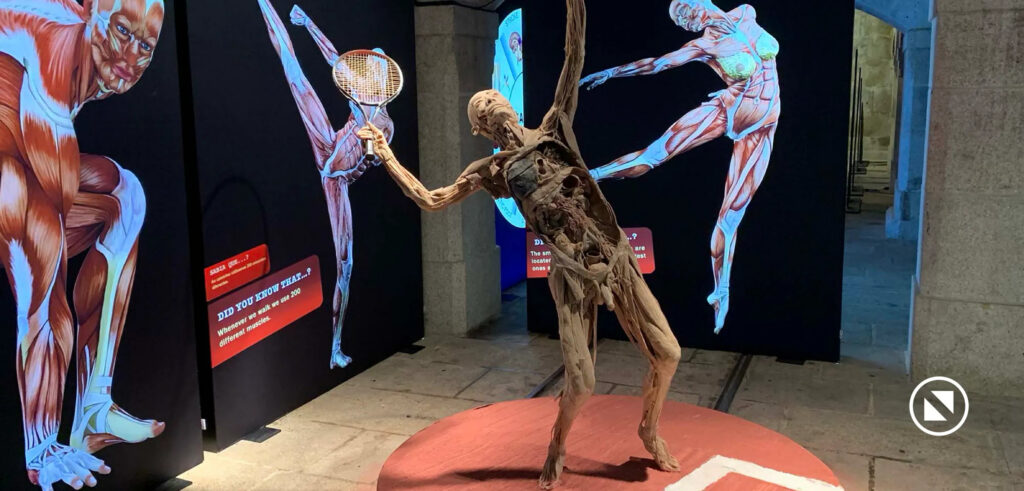
The Bodies — The Science Within exhibition has landed in Denver, and with it, fascinating insight into what’s really going on beneath our skin.
Hosted at Denver Pavilions, the exhibit runs through Sunday, June 28th, providing an up-close look at the human body and how it works. Built with real human specimens, the exhibit takes visitors through anatomical studies and how each system in our body works, including digestion, respiration, movement, reproduction, sensory functions and emotions.
These systems are thoroughly explained through both three-dimensional displays and comprehensive educational materials, resulting in a thorough exhibit, informative to children and adults alike.
Below are just five of the countless lessons the Dive team learned from our trip to Bodies – The Science Within.
1. Yes, the bodies are real.
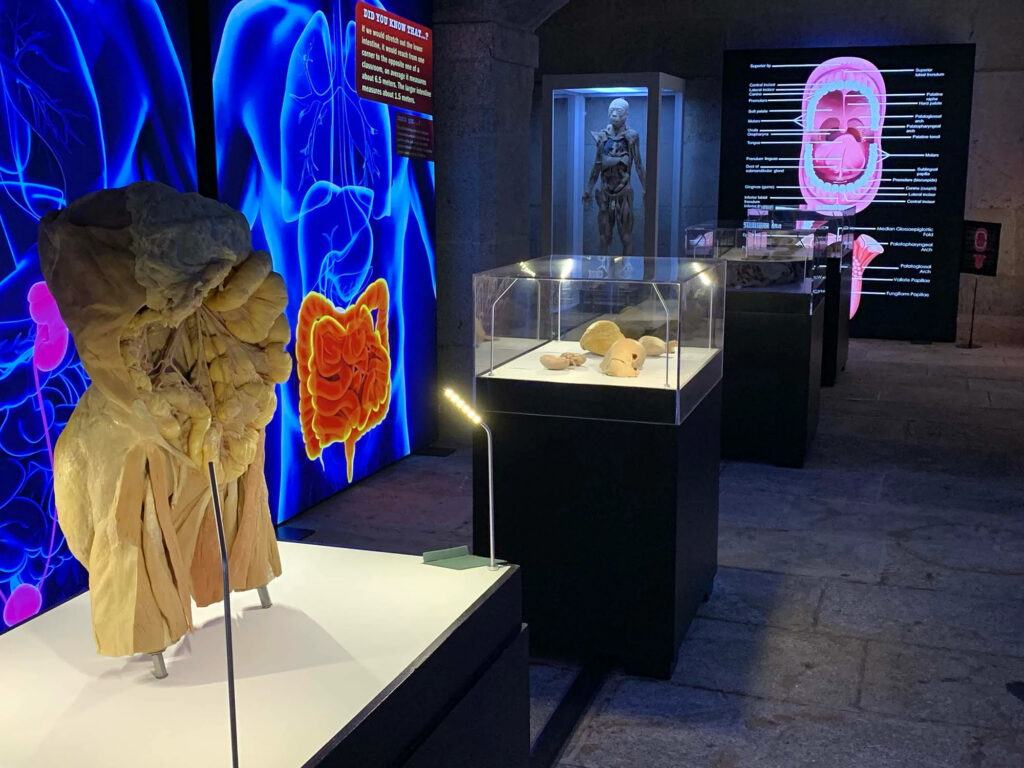
The Bodies Tour isn’t shy about their exhibit using respectfully preserved human specimens. But it wasn’t until our first encounter with a specimen labeled “superficial,” that it fully clicked: the organs, bones and muscles we’d seen previously were real.
The “superficial,” labels are few and far between in the exhibit as a whole. Instead, the organs, bones and muscles on display are all preserved through a process called “plastination.” Through plastination, water and lipids in tissues are replaced with a polymer, preserving the anatomical structures in an accurate and lasting way.
The result was a three-dimensional lesson in what’s really happening within all of us. After seeing the real size, shape and function of our organs and circulatory system, it was hard to leave with anything other than a deep appreciation for how hard our bodies actually work to keep us moving.
And as the sensitive artist types we are, it gave us the opportunity to imagine the incredible life these bodies had before we encountered them. Who knows? Maybe that pancreas belonged to someone really famous.
2. Demonizing carbs isn’t the key to wellness.

There are few things more delightful than a fun fact, and Bodies – The Science Within was full of them. Each room contained thorough explanations of how our bodies’ systems function,
Our favorite? Human muscles require a constant supply of sugar and oxygen to operate. Basically, the exhibit explained that our bodies break down carbs into glucose. That glucose enters the bloodstream through our digestive tract, the pancreas releases insulin and that insulin unlocks a pathway between our bloodstream and our muscles.
Sure, it sounds complex, but all that’s to say: maybe we should think twice about those fad diets that demonize bread and pasta. Moderation matters.
(Does this info justify our trip to IT’SUGAR immediately after we left the exhibit? We like to think so).
3. We should be kinder to our brains.
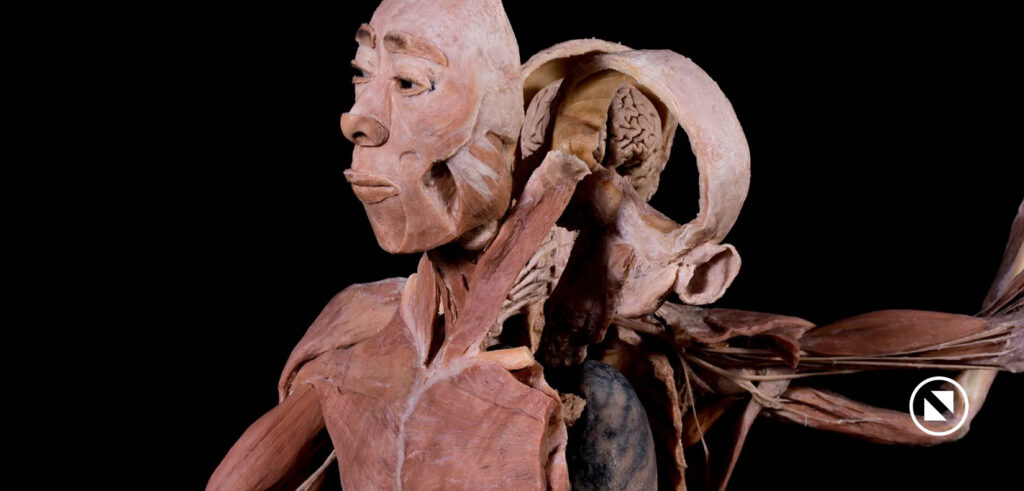
Sure, it seems obvious that our brains act as the control system for the entire body: sending signals to our organs, translating our sensory experiences into meaning and diligently filing away our memories.
But seeing it all laid out on display, with each section of the human brain given its own spotlight, really puts sweating the small stuff into perspective. The brain fires millions of neurons constantly, even when we’re sleeping. No matter what we’re feeling, whether that’s the pain of a stubbed toe, the chill from an open window, the familiarity of a regular commute or the unhinged energy rush after an ignored text, our brain is with us through it all (and deserves more appreciation).
4. Our bodily functions are more complex than they feel.
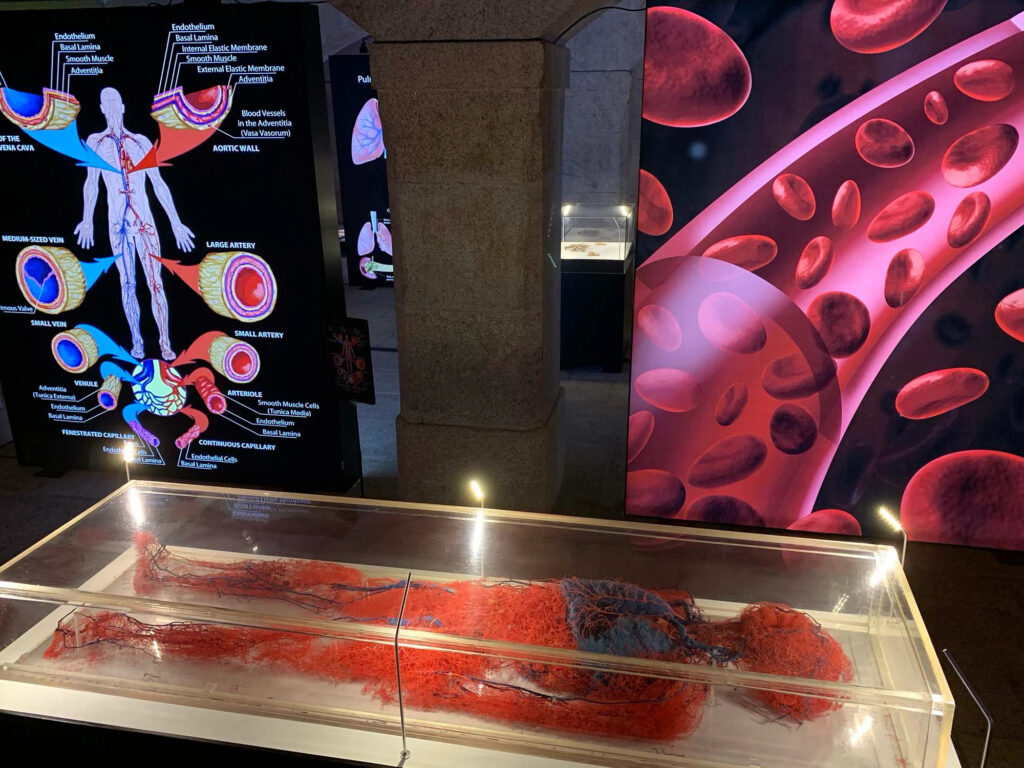
The exhibit’s display of each body system, from digestive to nervous to respiratory, was more than just a refresh from middle school health class. If we’re lucky, breathing and blood flow are processes that most of us don’t often think about, but the Bodies’ full-size circulatory system display proved that this system is incredibly intricate, with each tiny blood vessel pulling its weight. In other words, the display of blood vessels and capillaries was nothing short of beautiful, reminding us of the natural art within us all.
Add that to the knowledge that we each use 200 muscles every time we walk, and Bodies – The Science Within provided us with a deeper appreciation of how spectacular our bodies really are. As a whole, the exhibition displayed how each individual part of our body – no matter how small – work together just to keep us moving, something that’s easy to take for granted when you don’t see or feel them function.
5. All bodies are beautiful (and impressively intricate).

The differences in our outside appearances play a huge role in how American society operates. In fact, our outside appearances are perhaps the most obvious representation of what makes us all unique and make such an impact on our individual experiences.
So, while we find these differences invaluable, while humans are loving and fighting and surviving outside the walls of Denver Pavilions, there’s a distinct comfort in stripping down the human experience to the science inside: a science that every human being shares. Not only did the exhibit remind us that, stripped down to our bones and blood and muscles, we share more than we don’t, it served as a powerful reminder that our bodies are each medical marvels, performing countless intricate processes behind the scenes to keep us moving. And isn’t that the most important lesson of them all?
Bodies – The Science Within is at Denver Pavilions from Friday, May 15, through Sunday, June 28, 2026, from 11 a.m. to 7 p.m. Learn more and purchase tickets here. All photos courtesy of bodiestour.com.