Picture your average public restroom.
The stall doesn’t have a hook for your bag. The lighting makes you look malnourished. The air dryer weakly sprays lukewarm virus air on your wet hands, and you still have to pay for tampons like you’re buying a gumball at the mall.
In other words, most public restrooms aren’t designed for the people who actually use them.
In rare moments, you happen upon a bathroom designed with intention: one that makes you realize that free tampons and paper towels are the bare minimum. And sometimes, if you’re lucky, these bathrooms are stocked with toiletries you didn’t even know you needed until you saw them.
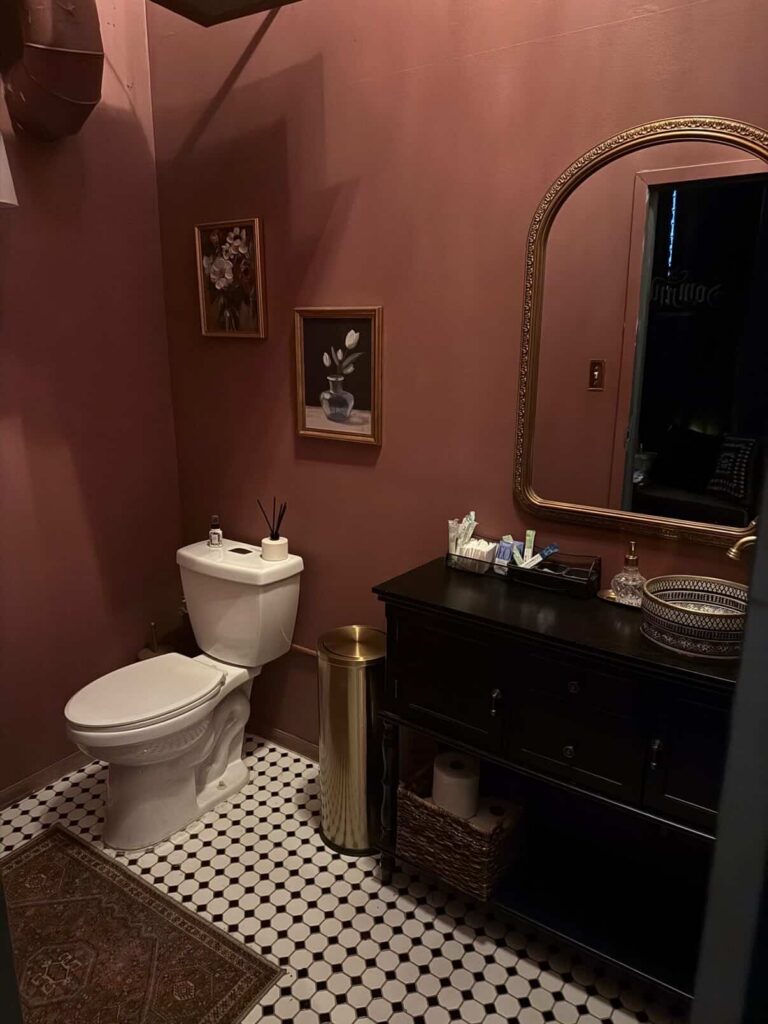
In an old building in Denver’s Ballpark District lives a bathroom that feels like every girl’s dream, with soft, flattering light grazing chic reed diffusers and reusable hand towels. It holds the solutions to all your problems: deodorant wipes, mouth wash, dry shampoo — even bobby pins, simultaneously the most crucial and liminal item on planet Earth.
This bathroom hosts guests of Somnium Therapeutics and the Skin Sanctum, two Denver-based businesses occupying the space above Sidecar Lounge. Instantly calming, the bathroom is a physical manifestation of the energy behind these businesses: anticipating your needs, almost like magic.
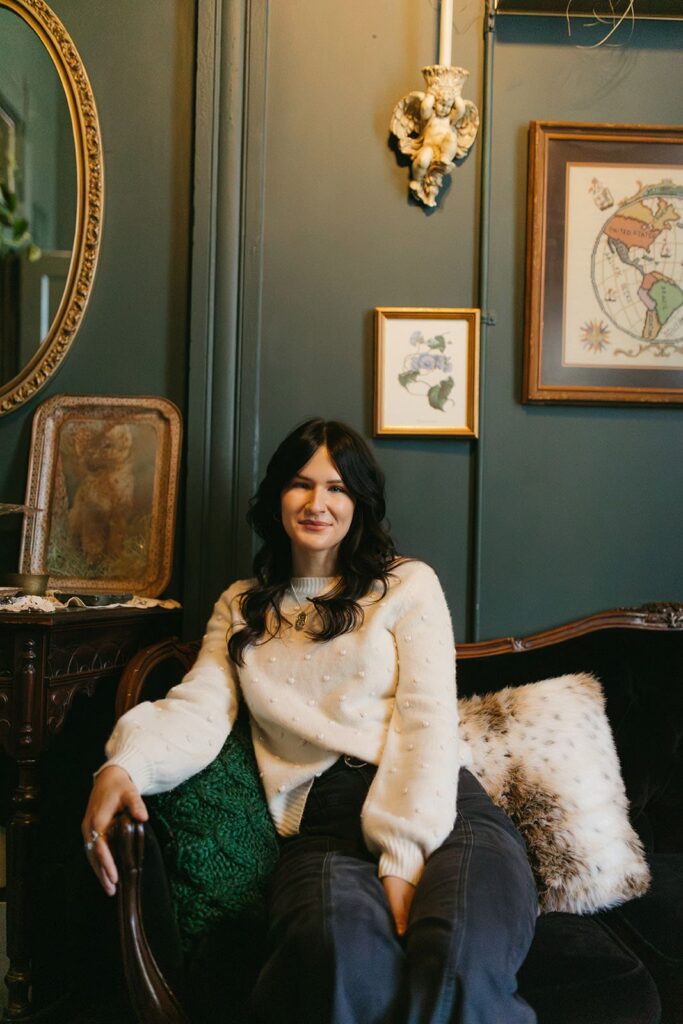
Walking across the hall to Somnium Therapeutics and meeting its owner and founder Val Darling, the thoughtful bathroom design starts to make a whole lot of sense.
Meeting Darling doesn’t feel like meeting a stranger. She’s warm and quick to laugh. She explains psychological studies from memory as casually as she uses to talk about her former job at Vans. She’s knowledgeable without being condescending, solid in her moral compass and carries the exact type of energy that makes a vulnerable service (like massage) feel safe.
“Somnium,” means “dreamlike” in Latin, and the name mirrors clients’ experience when they book a massage at Darling’s practice. Somnium Therapeutics offers slow, intentional massage therapy that allows their clients to connect with their body — and sometimes enter a dreamlike state.
As Darling describes it, Somnium Therapeutics is multimodal, trauma-aware and embodied massage and bodywork where evidence-based care meets somatic spellwork.
The evidence-based care is grounded in her background as a licensed massage therapist, paired with her studies in psychology. With a BA in Psychology and ongoing graduate work, Darling’s approach centers on the nervous system, treating chronic pain through the connection between the brain and body.
Thanks to her massage therapy license, she already understood chronic pain on a physical level. But the psychological perspective took shape during her undergraduate research, where she began exploring chronic pain beyond its physical symptoms. A key influence was “The Way Out” by Alan Gordon, which outlines Pain Reprocessing Therapy (PRT), a method rooted in research from a University of Colorado Boulder-led back pain study.
Gordon’s theory demonstrates the brain-body connection behind chronic pain, helping patients to reduce the fear, stress and anxiety associated with their pain — and in turn, reduce the pain itself.
“In doing undergraduate research for chronic pain, I realized that most people are lacking intentional care that’s not just pharmaceuticals,” said Darling. “If you’re coming in for something like chronic pain, the nature of the pain is ultimately what is going to change your life outside of the session.”

Take whiplash, for example: an acute, generally temporary ailment.
A patient might follow every recommended step from imaging to physical therapy and pharmaceutical support and still experience lingering pain. According to Darling, that’s where the emotional imprint of the injury comes into play.
“So, if you have a car accident and then you don’t work through the emotions that were associated with the car accident, people will still report having pain of whiplash,” Darling explained. “That’s because they were guarding it for so long and never worked through the emotions of it, which is ultimately why it’s chronic.”
“A lot of the theory is that, like, you just have such a deep association with your identity as far as the pain goes that you can’t move forward.”
Together with Bella Drew, Somnium’s other massage therapist, Darling puts that theory into practice. Within sessions, she’ll slowly bring her clients to awareness of that mind-body connection through slow, intentional nervous system work and paying close attention to her clients’ needs.
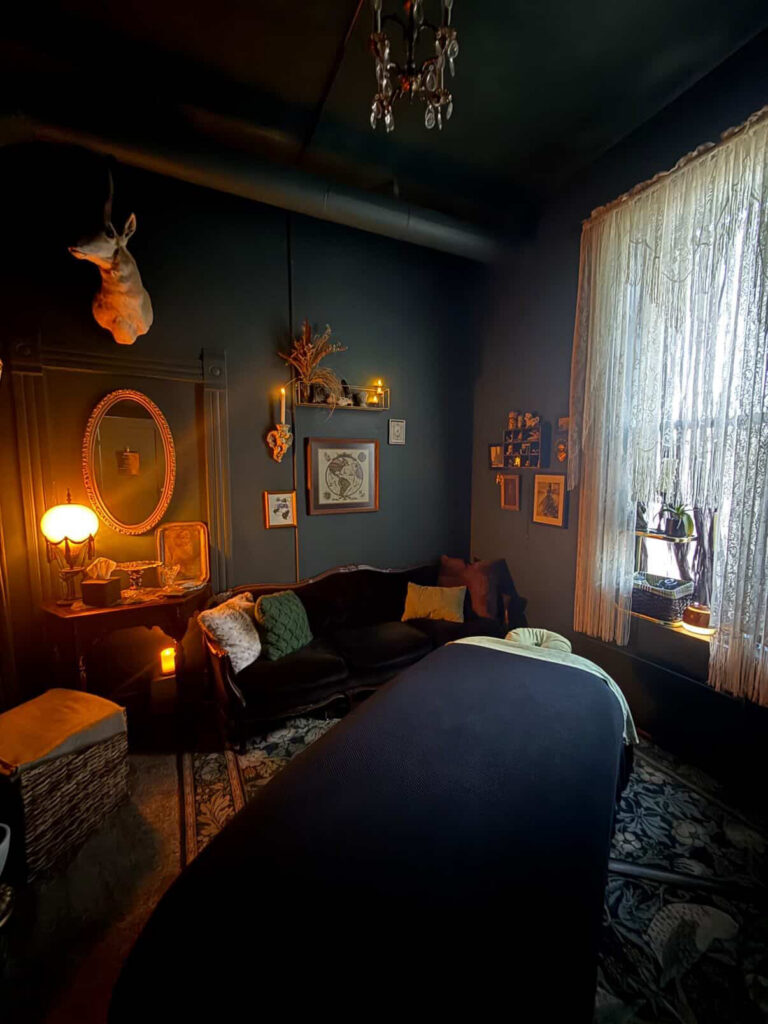
Rather than treating massage therapy as an isolated service, her work often exists alongside other forms of care, like acupuncture and mental health therapy, creating a more holistic framework for addressing chronic pain.
“We work really well with acupuncturists, for example, because there’s a lot of energy modalities that are physical that can help work with the neural pathways that have formed from pain and experience. So the client gets to be more of a passive partner in it,” Darling shared.
“And when you’re seeing a mental health practitioner, you’re taught how to regulate and come to terms with your emotions, and hopefully, when you come here, you’ll feel safe enough to experience how those emotions manifest in your body.”
Tangibly, this holistic framework can take a lot of forms, whether that’s touch reintegration for survivors of sexual violence or helping individuals with high levels of anxiety feel more comfortable releasing control.
“For people that have more guarding, that is where more of the mental work comes in,” Darling shared. “If you try to move their limbs during a session, they’ll lock it or try to move it for you, so I’ll tell the client, ‘you don’t need to do anything right now. Let me do this physical work, and then maybe think about what’s coming up for you.”
So while Darling is always performing physical massage therapy throughout each session, a large part of Somnium Therapeutic’s model is creating a safe space during each session: helping clients breathe through discomfort and feel safe and assured with whatever emotions come up for them while they’re on the table.
“Touch reintegration can be a very long process, but I’m always letting clients know that you’re not coming in here for a fluff and buff. You’re gonna be draped appropriately the entire time,” Darling explained. “You can stop the session at any point in time. Everything’s customizable. You can adjust it. You can cry on the table if you need to cry. You can laugh maniacally if that’s what’s coming up for you.”
And that’s where the somatic spellwork comes in. Sure, this spellwork is deeply embedded in the dreamlike energy of her practice, but for Darling, the magic behind Somnium Therapeutics comes down to intention, both her own and her clients’.
“Ultimately, massage therapists, acupuncturists, anybody in that holistic realm that’s still grounded in anatomy is more of a facilitator and the client’s the one who does the work,” Darling shared. “That’s not to say that we’re just passive bystanders, but for the client to see change in their day-to-day life, they ultimately have to do things like show up consistently and be receptive to the work.”
Similarly, Darling maintains her own mindset by taking care of her brain and body through exercise, sound healing and meditation. When she ensures she is grounded in her mental and physical health, those acts of self care keep her centered, so she can pour that same intention into every interaction with her clients.
“It’s a lot of creating space and holding space and ultimately just being a safe person to bear witness to that, essentially. A lot of it is active listening, picking up on nonverbal cues as well as verbal cues, being able to connect and understand where a person’s coming from, even if they’re not directly telling you,” Darling shared. “If I can show up as a pure and grounded individual to the session, and hold as much space as I possibly can for a client, that’s ultimately where the magic comes in.”
And while active listening and intentional presence is now inseparable from her massage therapy practice, Darling wasn’t always as centered in this belief. In fact, before Darling enrolled in massage therapy school, she hated receiving massages. It wasn’t until she visited a massage therapist who intuitively responded to her needs that she noticed a need for intentional nervous system work across massage as a whole.
“I fell asleep on the table and I was like, whoa, like your style is perfect,” Darling recalled. “You listen to me, you heard my concerns, my body feels good, my brain feels good. And I was like, why are there not more massage therapists like that?”

Now Darling takes pride in paying that experience forward. By balancing real anatomical science with intentionally and intuitively holding space, she hopes to popularize this trauma-informed form of massage therapy (and inspire younger massage therapists to approach the practice with a similar mindset).
“If I can get younger massage therapists or more green massage therapists to adopt this mentality, they will be able to communicate that to their clients and pass it down in the same way that storytelling works,” Darling shared.
Moreover, as she works on her Master’s degree in Clinical Mental Health Psychology, she hopes to expand Somnium Therapeutics to include mental health services. Because of the physical strain that performing massage therapy places on practitioners, Darling sees a future where she provides mental health therapy to clients, giving personalized recommendations for massage therapy all under the umbrella of Somnium Therapeutics.
“Ultimately, I want to also be able to provide the mental health aspect as its own session to give an easier transition for clients who still need the body work,” Darling shared. “Because we will already have the established relationship, I can tell you how it’s going to manifest in your body or how it is showing up in your body now so that we can do more full, well-rounded work within the same practice.”
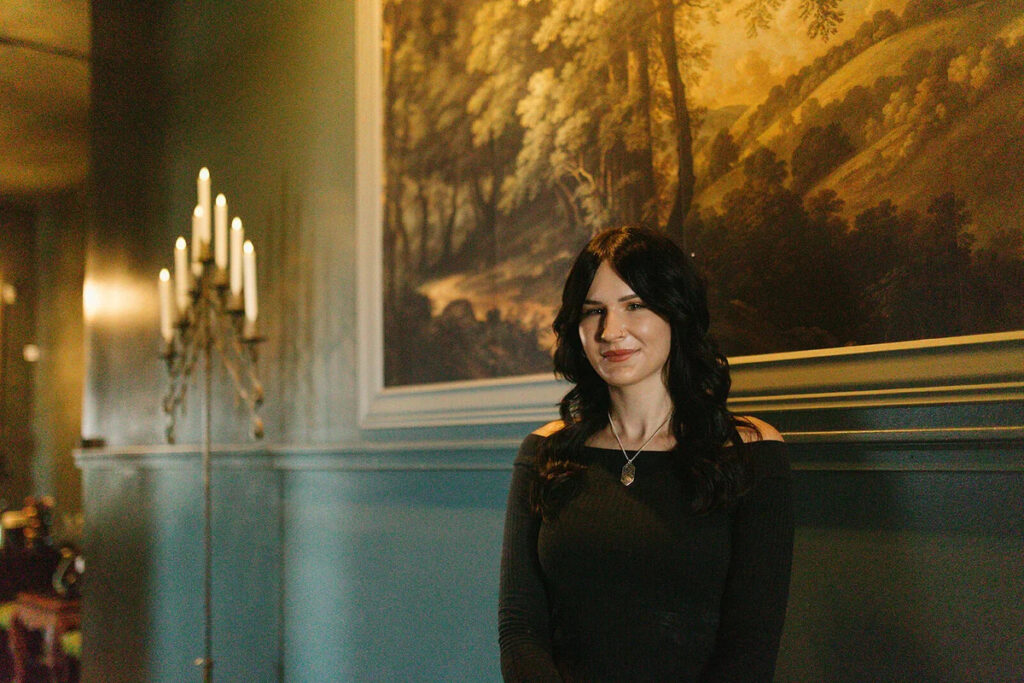
And while that future points toward expansion, the core of Somnium Therapeutics is already tangible in the small, intentional moments: in the way Darling listens, the way she holds space and asks her employees and clients to do the same for themselves.
At its core, her work moves beyond just relieving pain to changing the way people understand it. In helping her clients connect with their body and feel safe on her table (sometimes even safe enough to fall asleep), she gives them the support they need to finally move through their pain, reframing it to create long-term, sustainable relief.
In that sense, the experience of Somnium Therapeutics starts long before the client reaches the table. It begins from the moment you walk through the door, in the details that anticipate your needs before you even have to name them: the fully stocked bathroom, the softened lighting and the quiet understanding that you’re allowed to show up exactly as you are.
And maybe that’s where the real magic behind Somnium Therapeutics lies, in the care Darling puts into making sure clients feel heard before the session begins and long after it ends.