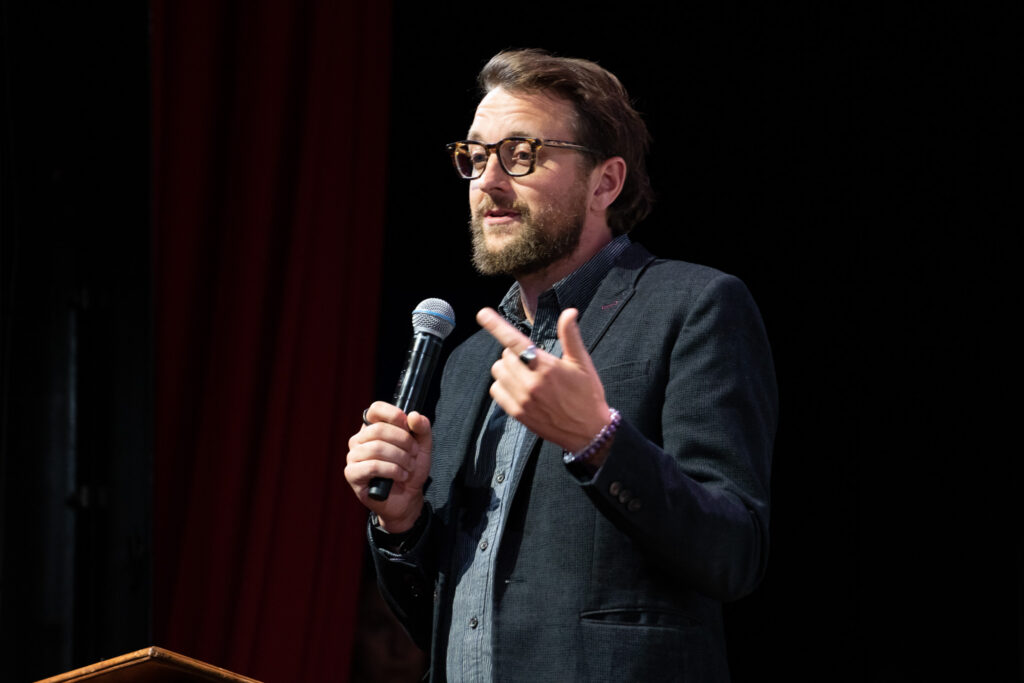
Joshua Kappel sits in the open trunk of his van. He flips his camera to show a crow wandering into the grassy space where he’s parked.
“He’s just staring at me. Hey buddy, you want to be in this interview, too?” Kappel laughs. Turning the camera back around, he returns to his in-progress thought, discussing his work helping to shape psychedelic regulation in Colorado.
The crow was a brief interruption in a conversation about medicinal psychedelic use. Kappel met with Dive after the recent passage of House Bill 26-1325, legislation that lays the groundwork for medicinal ibogaine use in our state. Instead, that discussion revealed a bigger lesson about our state’s psychedelic framework as a whole, a tension that Kappel has been grappling with in recent years.
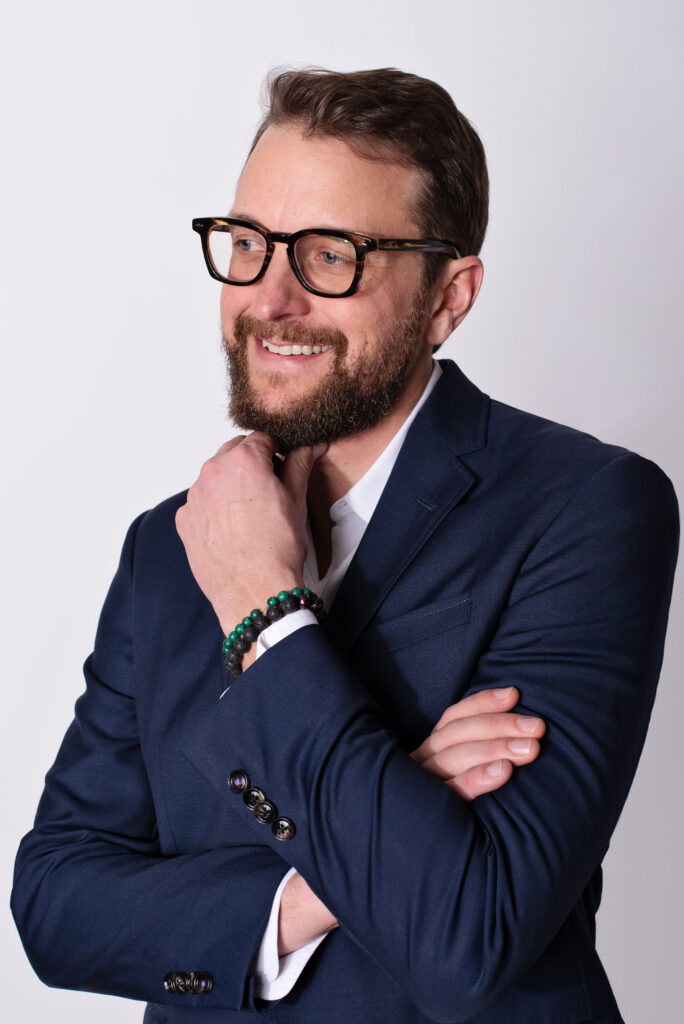
As a founding partner at Vicente LLP, Kappel has acted as a major player in Colorado’s drug policy scene for over a decade, helping to shape significant policy around cannabis and psychedelics. He co-authored Colorado’s Natural Medicine Health Act in 2022 and helped draft Amendment 64, the first state measure to legalize adult-use cannabis in 2012. Between policy work, he’s heavily involved across the industry as a whole, acting as a founding board member of multiple related organizations and helping companies of all sizes navigate the constantly-moving fields of psychedelics and cannabis.
He’s a serious lawyer with a serious resume. But that seriousness doesn’t stop him from recognizing the spiritual nature that’s inseparable from the substances his career centers around. In his current work helping to establish a framework for medicinal psychedelics, he’s working within the historical and cultural roots that cannot be separated from these substances, something that requires him to come to terms with his relationship with what he calls “the sacred.”
In handling work with incredible cultural significance, he’s intentional in maintaining integrity. But even so, similar to how he addresses the crow in front of him, Kappel speaks of this goal with a self-aware sort of jest.
“I’m not this ethereal all the time. I am actually way more practical and pragmatic,” Kappel laughed. “You just caught me on a sunny morning right after the solstice.”
Right after the solstice or not, he’s touching on something poignant about his work: Kappel has been helping to bridge the gap between the ethereal and the pragmatic for most of his career.
House Bill 26-1325 passed in May 2026, establishing pilot sites to study the effects of the naturally occurring psychedelic ibogaine on conditions such as mental health and substance use disorders. This bill is the most recent in a line of legislation around medicinal psychedelic regulation after the passage of the Natural Medicine Health Act of 2022, also known as Proposition 122.
As Colorado is only the second state to create such a framework, Kappel’s work has a natural air of “all eyes on you.” Luckily, however, when it comes to braving the unprecedented, Kappel is highly familiar. He’s worked on drug policy reform since college, eventually gravitating toward Colorado’s growing cannabis movement. In helping to build the first regulatory system for cannabis in the world, Kappel learned that seemingly immovable systems may, in fact, be moveable after all.
“From there, it really became evident that it’s possible to make changes in the world, and what those changes look like and how you make them is very fact-specific,” said Kappel. “There’s a playbook, there’s levers of power, there’s government officials that decide how things should be, there’s lawmakers that create these laws that everyone’s supposed to follow. At first, it seemed like a brave new world of how we make political change. Now it’s sort of ingrained in my system: this is how we do it. This is the playbook.”
The playbook that he’s referring to is based on a seemingly straightforward formula: start by figuring out what needs to change and what system makes that change, and then determine what is feasible based on what the public wants and what the decision makers are likely to agree to.
In reality, of course, that formula is not so black-and-white. Particularly when it comes to long-held judgments about plant-based medicine and its users, making political change means bridging the gap between historical context and cultural significance, all existing in the ever-shifting intersection of progress and perfection.
“A lot of the laws were created around taboos and judgments that weren’t actually based off of science or weren’t actually based off of humanity,” shared Kappel. “From a political pragmatic standpoint, the tension is between what is politically viable and what is ideal. And a lot of times what is ideal isn’t politically viable and vice versa.”
This tension became particularly evident when, in 2018, Kappel began moving beyond cannabis reform into the complex world of psychedelic. Now, he navigates a different sort of history. In comparison to the regulation of cannabis in the United States – with roots tracing back to the Nixon-era War on Drugs – the roots of oppression around psychedelics are far deeper and more widespread, tracing back centuries.
“With cannabis, the War on Drugs imprisoned hundreds of thousands of people over time. And most were people of color and most were from disproportionate communities, and it was mostly coming from using it as a tool of oppression,” Kappel explained. “Whereas, when you look at psychedelics today, what we’re talking about is creating access to a sort of generational healing, creating access to a transformative healing that has roots in, not a war on drugs from the last 60 years, but in colonial oppression over the last 500 to 700 years where there has been systematic efforts to erase cultures.”
Recognizing the negative impact of the legal professionals that preceded him decades or centuries before, Kappel knew creating a regulatory framework in our country’s current healthcare system could quickly dip into capitalistic appropriation. As such, the only way to properly create a regulatory framework was to turn to the community whose knowledge of the substance predates our modern system.
“There’s been these systemic and systematic institutions that have tried to erase cultures that we’re finding out today, hold a lot of ancient knowledge and technology around healing and around community healing, not just individually,” Kappel explained.
“In the capitalist commodified culture that we’re currently living in, our desire a lot of times is ‘how do we take something that could be promising and repackage it and commodify it?’” he continued. “So the tension in this space is, as the global North wants to modernize and create access to broad based transformational healing with these very powerful psychedelic medicines, can they do so without extracting it or stealing it from these cultures that they tried to erase centuries back, or maybe just decades?”
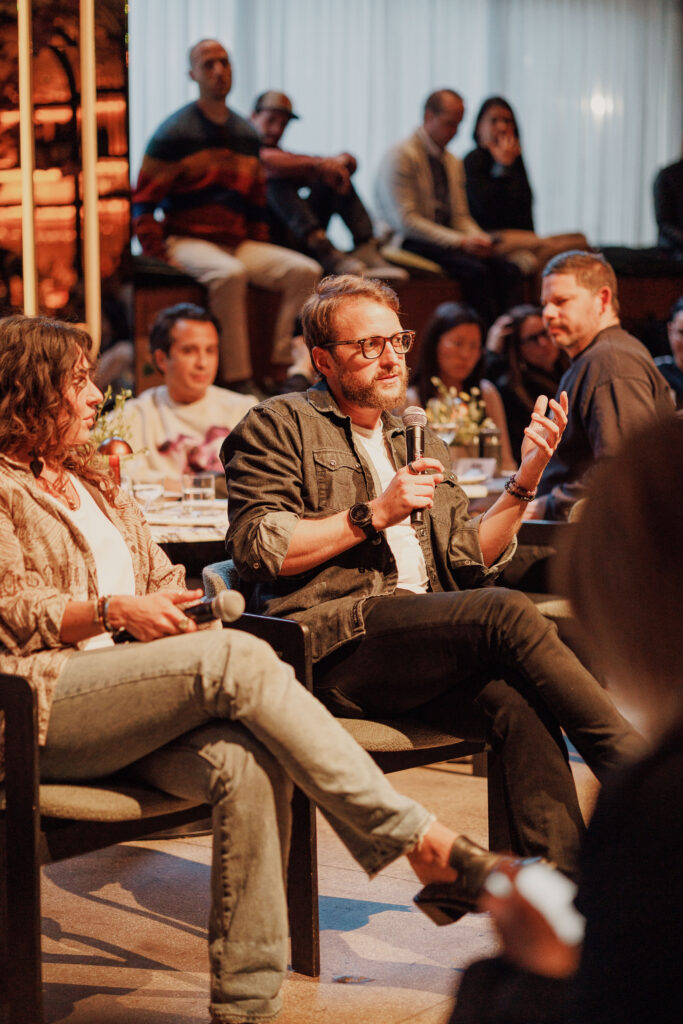
Building this regulatory framework meant speaking with Indigenous communities, rights groups and conservation organizations directly – and then ensuring that each bills’ language requires reciprocity. In fact, the recently-passed ibogaine bill mandates Indigenous benefit-sharing, requiring those licensed to cultivate, manufacture or administer ibogaine to establish a plan in collaboration with Indigenous communities.
This mandate is an extension of Colorado’s Natural Health Act, one that is, by the letter, rooted in equity, responsibility toward reparation and minimizing future harm. In particular, one line reads: “This community access model is necessary for many people whose cultural lineages will not fit within the regulated therapeutic system.”
That line is particularly relevant in establishing regulations for psychedelics, as, in speaking with Indigenous communities, Kappel and his co-authors found that ideal reciprocity held different definitions for different native communities.
“You have this huge gap in views, because a lot of times people’s views on psychedelics relate to their views on the world,” Kappel reflected. “How do we take these different views that are, in my opinion, all very true even if they conflict, and try to put them into a policy that causes the least amount of harm and brings the most amount of healing?”
Some individuals expressed a preference to facilitate psychedelic use themselves. Some pushed back entirely or suggested the use of synthetic versions. Others warned of the spiritual power of the substances, recognizing that the United States’ healthcare system may not be fully equipped to step into realms that confront matters of the heart and spirit.
“Even then, the Indigenous reciprocity lens, in and of itself, implies ownership of things that don’t fit into the ontological worldview of these traditional communities,” Kappel stated.
Across the Indigenous communities in our state, psychedelics were closely tied to the very nature of our being, playing a role in various traditions, ceremonies and prayer spanning the spiritual realm. As such, Kappel and his co-authors sought to do the impossible: bridge the gap between intangible spiritual tradition and fact-based medical science.
“Sometimes the gap can’t be bridged. We were able to incorporate some suggestions [into the ibogaine bill], but it wasn’t politically viable to make it stronger,” he shared. “It’s not like there’s a textbook formula of how this works, bringing the spiritual into the mundane. Some might say you can’t even do it. They’re different worlds, and as soon as you try, you have some other piece of the puzzle that makes it very difficult.”
In the nearly four years since Proposition 122 has passed, Kappel has come to terms with progress over perfection, with causing the least amount of harm and bringing the most amount of healing.
Still, mirroring the very nature of his work, the impact of this legislation isn’t black-and-white. Its passage doesn’t mean that the work is over, and its imperfection doesn’t mean all hope is lost.
Instead, Kappel believes in just the opposite, that the “proof” that lawmakers need around psychedelic’s medical benefits will open doors for more equitable models and, from there, transformative, community healing.
“At the end of the day, most people in the US aren’t that familiar with psychedelic-assisted therapy. The political reality of that is packaging things in a form that people already understand,” Kappel noted. “Synthetic psilocybin as a pharmaceutically-approved drug will be fantastic for a lot of people, and there will be tons of healing that happens from it. And there’s this deep need around research and education and how we deal with the spiritual effects of taking people to these super deep places of consciousness. All of that will have to be shaken out.”
Of course, the shaking-out process within a regulated framework will inevitably impact Colorado’s unregulated industry. In reality, it likely means an end to unlicensed sales and independent mushroom pop-ups. Naturally, this part of the bill has its skeptics: those who are suspicious of government involvement in natural substances.
In addressing these concerns, Kappel reframes that thought process by recognizing the opposite: that, in complete criminalization, psychedelics are under complete government control.
“Right now, psychedelics are incredibly controlled by the government. If you use them, you get arrested. You go to jail. You can’t import them. You can’t export them. You can’t grow them. It is so controlled. You can only use them in very limited circumstances, and even then, you need millions of dollars in safety guard rails,” he explained.
Instead, Kappel recognizes loosened control as progress (and necessary progress at that). With more research and the development of a formal modality of psychedelic-assisted therapy comes fuller education for United States citizens. That education will only solidify psychedelics as substances with real medical benefits. And once those with law-making power recognize these substances’ ability to reduce pain and promote healing, our regulatory framework will grow toward more comprehensive cultural reparations and individual access.
“The more you loosen things, the more people realize these substances can cause healing,” said Kappel. “They’re not that dangerous. They can be used safely. They’re really transformative. They can increase your own humanity, and then you can keep loosening the controls. And so that’s how I look at it.”
With more research done, then, the better equipped we are for harm reduction and both community and individual healing. In fact, Colorado’s burgeoning framework has created something of an experiment. Colorado has an obligation to set a precedent, and, with that obligation comes a make-or-break pressure that could determine the future of psychedelic-assisted therapy across the nation.
As a result, pop-up sales jeopardize the broader effort to serve as a successful example to the rest of the country in proving the safety and efficacy of decriminalization.
“In Colorado, there’s a duty amongst those in the psychedelic community to prove to the world that decriminalization can work and that community-based healing can work. And that was not what was happening when people were selling mushrooms on the streets,” Kappel shared. “When that happens, when people ignore the rules and set up a booth on the street selling mushrooms, that’s how we jeopardize this place that we have of ‘does unregulated, lightly supervised, community-based healing work?’”
Across Indigenous communities, crows hold important symbolism: of hidden knowledge, of deep wisdom and of bringers of transformation. Maybe it’s no coincidence, then, that one appeared during a conversation centered around a transformative future in dialogue with ancient Indigenous knowledge.
For centuries, psychedelics have carried knowledge that existed outside of dominant systems, instead rooted in ceremony, community ways of understanding healing that modern institutions are just now beginning to recognize. As Kappel helps to build a framework for these substances in Colorado, he looks toward a future where science makes way for humanity, and where regulation makes way for freedom.
“I would like to see a world where humanity is centered, where humans can use plants that are in front of them and explore their own consciousness, where they’re not told, ‘this is what healing looks like,’ or ‘This is your lifelong diagnosis. There’s no help. Take this pill for the rest of your life,” Kappel shared, dipping into the ethereal nature he’s quick to attribute to a sunny, post-solstice morning.
“I want to live in a world where that’s not the case, where people can evolve, and people can grow, and people don’t have to be reliant on manufactured or sanitized modalities of healing,’ he continues. “I think that creating access to psychedelic care that embraces both the medical and the spiritual, that embraces both self-directed healing and supervised care, that also honors the deep roots of where this came from, will help to create new cultures that will preserve the test of time because they create an actualized community.”
Until that utopia takes form, he’s taking smaller steps: slowly helping to popularize other modalities of healing, imagining a world where individuals with chronic illness or pain can microdose on their own, and, ultimately, moving toward their own healing on their own terms.
And as Colorado continues writing this unprecedented chapter, Kappel’s work remains rooted in the same question that has guided him from the beginning: how do we build a human-centered future without forgetting the wisdom that brought us here?