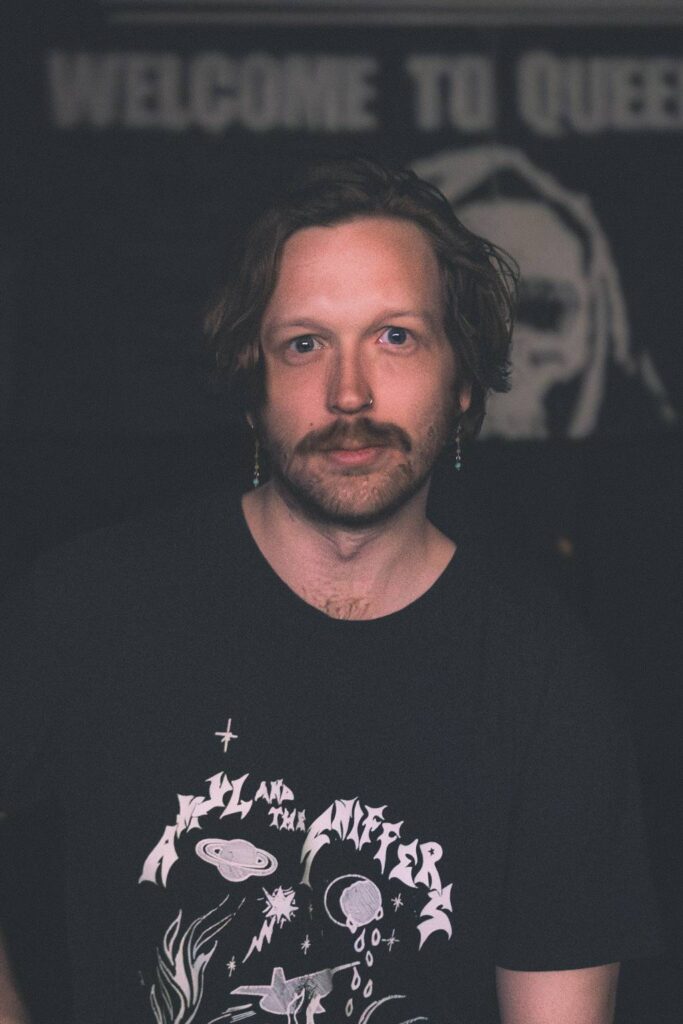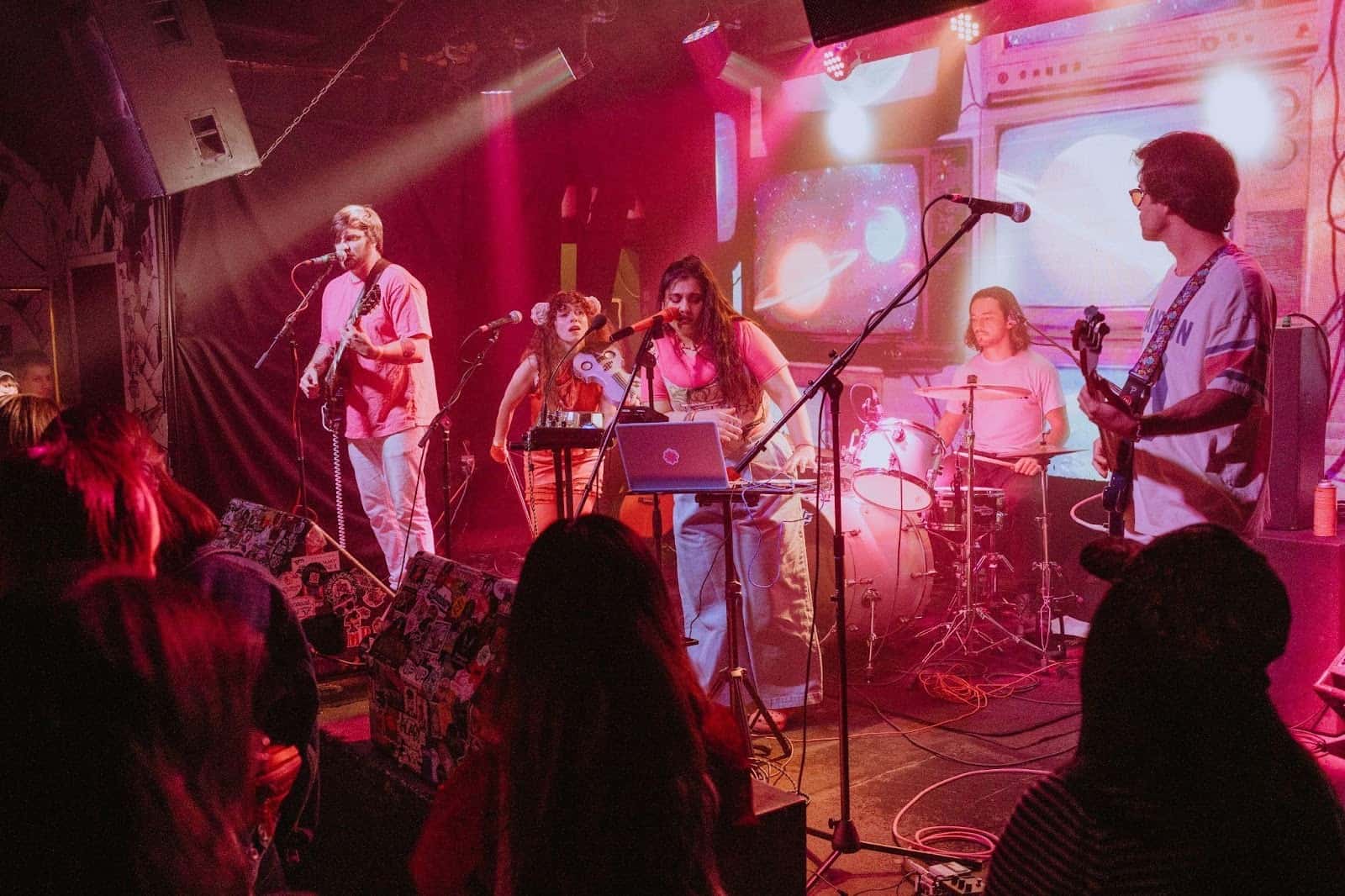
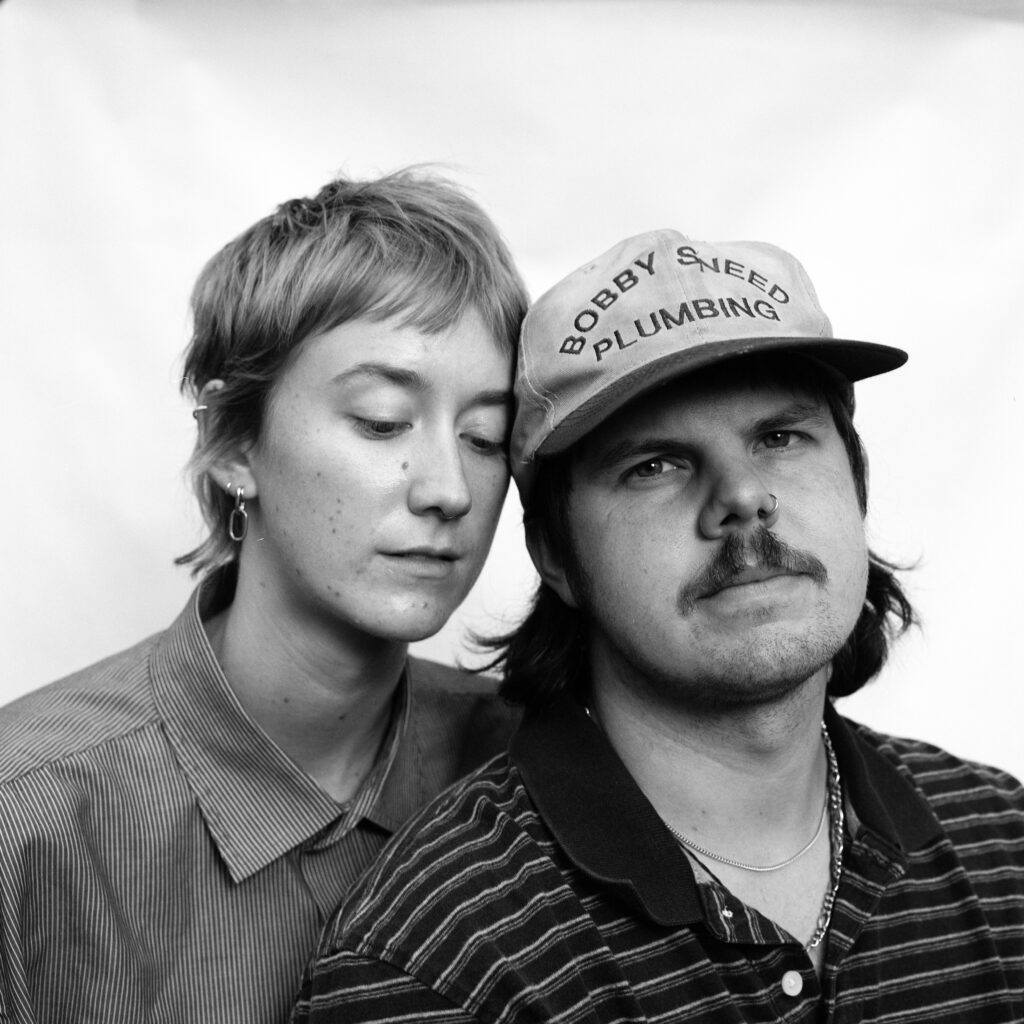
Experimental indie-folk group Frail Talk makes songs that feel like the summer storms, the sun illuminating the clouds and turning raindrops into memories that seep into your skin and stay with you forever. Their music is what it feels like to hope when thunder crashes around you, shaking you until you gather yourself and learn to harness that thunder that exists within you. It’s music that captures sorrow within it, but that teaches that sorrow how to dance with joy, leading to the two swirling together until time itself reaches its end. The band’s new EP “Circles and Visions” teaches those who hear it how to hold onto hope in the face of unrelenting grief and that the moments between the crashes of thunder, flashes of lightning, are the moments that love truly live within. It’s a beautiful piece of art written by beautiful artists, the kind of work that brings peace be merely existing.
Denver Dive recently spoke with core Frail Talk members Ali Woodcheck and Cor Wright about the latest EP, what it feels like to return home after being out on the road, finding hope amidst grief, literary influences on their songwriting and much more.
Denver Dive: I usually like to start these off, especially with sort of younger bands like yourselves, to kind of like just in your own words give the opportunity to just introduce yourselves and just kind of tell me a little bit about what you guys do.
Ali Woodcheck: Well, we’re a band. We’re called Frail Talk. I usually describe our music as the way we both, Cor and I, connect to the world and connect to other people. Building this project over the last five or six years has felt like our way to try to feel the most human and like ourselves and feel connected to the world around us by making music and touring.
Cor Wright: Yeah, I think there’s like a conventional way to talk about it an unconventional way to talk about it. One of which is Frail Talk in terms of like genre as a specific thing and Frail Talk in terms of like ideology and world building is a different thing. I think that the genre elements are whatever you hear, indie influences. We’ve called it “squiggly indie” for a while and I think that’s still fitting. I would say that the world building side of things is just a lot about like building a space for people to enter into, and whether that means the physical, live space, or whether that means an installation type space or the art side of it or just a headspace, even. I think those things have become really important to us.
DD: Could you elaborate on “squiggly” a little bit?
CW: I like that question.
AW: I think in some ways it references the attempts to genre bend and the lack of the straight line or a box to fit the sound into. It refers to our instrumentation and exploring a lot, following every whim that comes to us when it comes to the sonic space. I think there’s a lot of playfulness and a lot of trying not to really follow a lot of rules. Each release, I think, is quite different from the last. There’s a bit of a sonic meaning to it, but I think there’s also maybe a more emotional meaning, too.
CW: I would follow up on the sonic portion. I think very literally, in terms of a lot of the spaces that we’re looking to create, they’re a bit softer. I think that that follows the line of a sine wave. If you think about a sine wave versus a triangular saw or something like that, with electronic elements involved, and I think that that squiggly nature is a soft bending of a lot of things that leads into that the genre bending or instrument bending.
AW: It feels true, too. I think both Cor and I always feel that there’s so much room in music to show up feeling like it’s about you as a performer and to feel this sense of entitlement or to seek a certain level of “coolness,” or I don’t know, putting on a certain basic presentation. I don’t think either of us have ever really felt like we’re able to do that with playing music. We feel pretty almost lame in some ways.
CW: Yeah, it’s lame core.
DD: I like to take things just all the way back in the day. Tell me any memories you have of first becoming interested in music, whether that’s first picking up a guitar or if it’s memories of music your family played around the house, anything you can tell me about those early days falling in love with music.
AW: There’s very vivid memories of when I was like 11, my dad gave me a CD player for my room and the first CD that he gave me was Nora Jones. I would just lay on my bed playing this Nora Jones CD over and over again. I then slowly built my little CD collection as an 11 year old, which was, probably mostly Taylor Swift. I spent a lot of hours spent laying on my bed listening to CDs on repeat, just like feeling the emotion in my body.
DD: Very cool. I remember starting to collect CDs as a kid. My parents put me onto classic rock bands back in the day and stuff, and I had such a point of pride about like my CDs. No one else was allowed to touch them and all that stuff. They were my safe spot. Cor, do you have anything you’d like to share?
CW: Two memories that came up when you were talking about that. The first one is also sort of buying my own CD, and I remember I bought simultaneously, I think it was a Dropkick Murphy CD and an NSYNC CD. Those are the first two CDs I remember buying and that physical nature was so important, too. We love this art. I think both of us are very interested in artifacts of music and like the way that physical media exists in music.
The second is a really weird sort of memory. My dad had this fairly obnoxious Mustang and it was pretty run down, and kind of a piece of shit, I guess. He would play with the top down the band Erasure all the time, and it was the most confusing and like sensory experience that I think I had as a kid, and I just remember this one album on repeat, and I remember the feeling of associating the rushing of wind with that kind of song and music.
AW: I feel like early experiences in music are so physical. It exists less in my mental memory and more just like in my body. I grew up in in Texas, in the hill country, and spent so many early years at these country dancing halls as a little kid. I don’t remember even the sound of the music but I just remember the physical sensations of like being in places where music was happening, and how important that was.
DD: I grew up around Nashville myself and I grew up surrounded by those country music halls as well. A lot of Dolly Parton and stuff like that. I remember my dad taking me to see BB King when I was probably around 12 years old or so. It was this old dingy dive bar, blues bar, where everyone’s smoking cigarettes and drinking and dancing. I was too young to be in there for sure but I can still remember what being in that smoky room felt like. I think that that’s a very interesting point that I haven’t really heard put to words before and the idea of the physical memory of early musical experiences is very relatable. When did y’all want to start actually pursuing music professionally? I know y’all came together as Frail Talk in 2020 but was it before that? Were you guys doing things individually, or just kind of, how did y’all start to actually want to pursue it?
CW: Hmm, yeah, I’ve had an interest in it since high school. It was always something that felt like a completely inaccessible space. I had a project before Frail Talk called We Are Forest. It’s now still an ambient project that I work on on the side. I was trying to tour that. I was in a lot of other bands, I was in a band called Places Back Home, was in a band called Safekeeper. I have been in a lot of other very different projects, and have helped and recorded other music. I just think it’s such a fascinating world.
AW: I really never would have pictured this to be my life.10 years ago if someone had asked me if I would be engaging in a world where I was playing music full time, I would never have believed it. It wasn’t even something I really allowed myself to dream about. I didn’t grow up with feeling like that art as vocation was something that was even possible, really. When I started playing music, it was in when I moved to Colorado, and really, for the first time, playing real gigs and experiencing life as an artist has been mostly through Frail Talk. I remember having this feeling after doing some of our early tours, where I felt like that thing that people talk about, finding a job or a vocation that clicks for them, I was like, “Oh, this is the feeling that everyone else has been talking about for years, of finding the thing that they love to do and could see for their life.” I never had that feeling with anything else that I did. I went to school for counseling. I was gonna be a therapist. I worked in social work and I never had that feeling that I was doing what I was supposed to do until I started playing music. Then it all clicked and it has been the thing I’ve been trying to make a part of my life more than anything else.
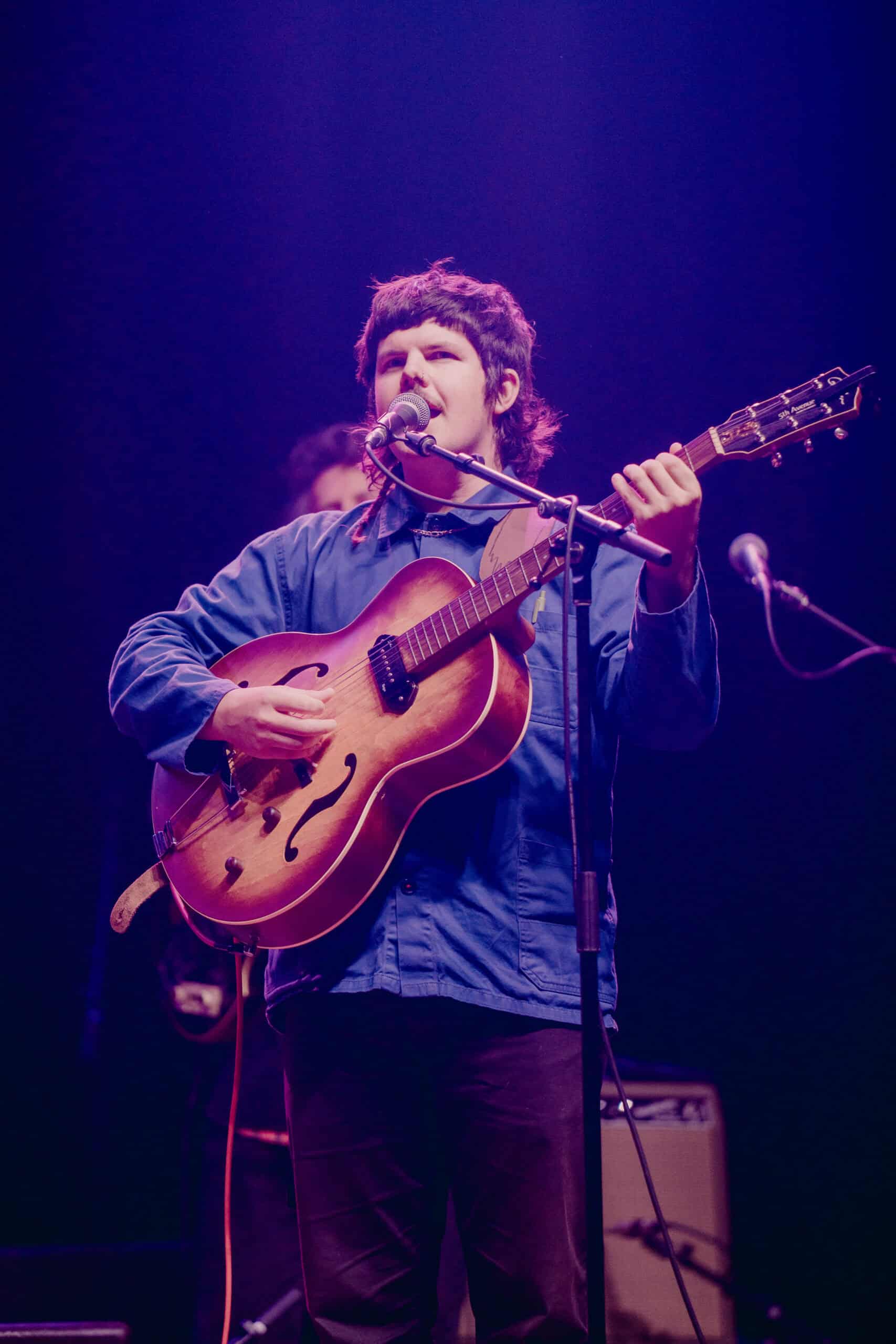
DD: That’s beautiful and leads me to how Frail Talk initially came together. It was in 2020 so I’m assuming it was happening during the pandemic. Was that part of it? Anything you can tell me about how y’all began playing together.
AW: Cor, and I met in the Fort Collins Museum a few months before the pandemic and just hit it off. We had a lot of chemistry with songwriting and singing and explored new sounds and songs together. We thought it would be fun to go on a DIY tour in March of 2020 just to explore the sound, and then, of course, that all was was canceled. So the rest of 2020 and 2021 we did a lot of songwriting and home recording together with a lot of different people sending in recordings from different rooms and spaces around Northern Colorado. So the band really started out as a lot of just sonic exploration and piecing together our first record. That’s how I would describe it.
CW: Yeah, I’d say that. about sums it up.
DD: I do want to talk about the sound and the themes that y’all deal with, especially on this most recent EP, “Circles and Visions”. There are a lot of the big themes like grief and loss, but also so much hope. It also deals with such big ideas, but I feel like you take a rather minimalist approach. What is it about taking that sort of stripped down approach that allows you to better explore those bigger ideas?
AW: I like that question a lot.
CW: I think I think when you’re sifting through a feeling and when you’re doing that with the song, you’re funneling down what you think the main thing is all about. I think often all of the jumbled words will wash down to what you think are the the main elements and that’s that jumbling or that sifting or that it’s almost like like when someone’s panning for gold they like take out the big pieces. You’re sort of like taking out this the silt and then looking for what’s left over and I think that’s a lot of our process.
My process at least is just like “What am I trying to say?” I had a great conversation with a friend this morning about how you’re always communicating this thing or all of the things around the thing and how those those things interplay with one another in this beautiful way where like saying what you actually feel is so direct, but then saying what you feel about how you feel is so indirect.
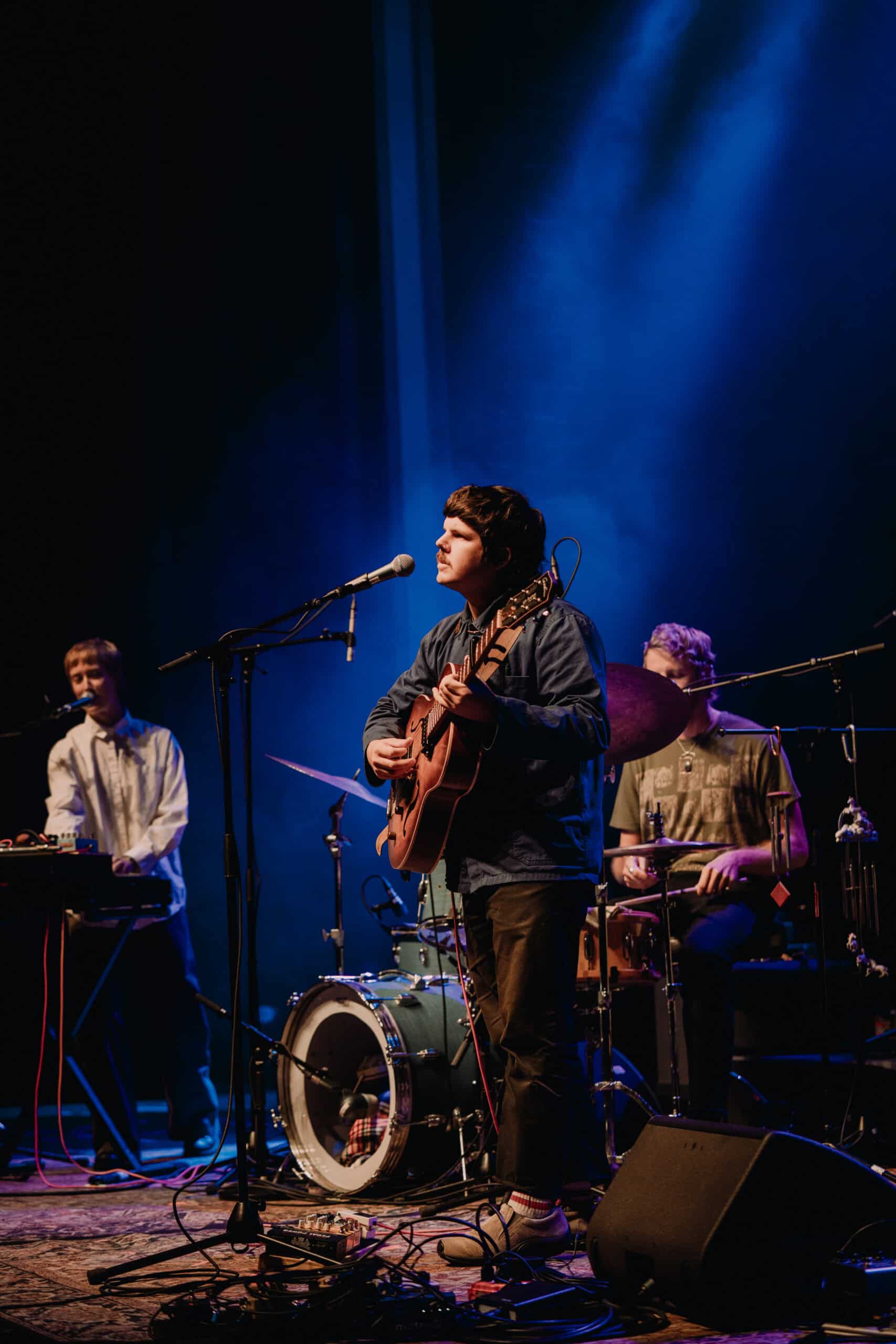
AW: I think with these songs in particular, they held a lot of emotional weight for us, a lot of reflecting on so much pain on a global scale. But, also, we were reckoning with personal grief. I had lost my mom like a year before we went into the studio. A lot of the songs were sitting with this very personal grief as well. It really felt very, very true to record. We just recorded as a four piece band live all together in like a tiny room. Simplicity, like you’re asking about, really did feel like the most sort of honest or truthful way to communicate what we were feeling, sort of like Cor was saying. We cared about the instrumentation and the sounds we were adding, but I think more so what really mattered was actually sharing the physical space and the emotional connection between the four of us (Woodcheck, Wright, Nathaniel Riley and Tobias Bank) and our engineer, Mark. There was a full moon the two days we were recording. It was also during my birthday and there’s snow all around and we were in this very homey studio in one little room. I think that that simplicity in sound actually came from a great like complexity of emotion and connection between us as the band. Letting the sounds that come from the physical space and emotional space that we recorded from, even if they’re not audible, I think they carry an emotional weight in the space between things on that EP. I’m so in favor of letting there be space and moments of quiet and maybe not filling everything up. It felt very true to the emotional way of songs. Space is not emptiness.
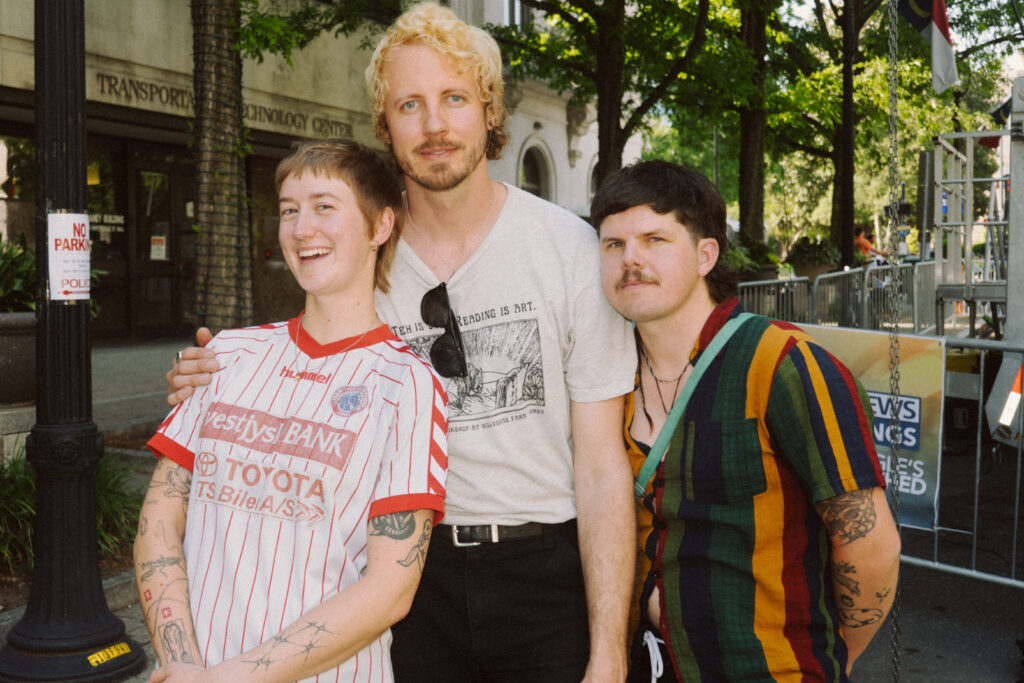
DD: Thank you for sharing that. I do want to talk about some of those big themes as well, like the idea of grief, but also there’s a lot, a lot of hope on the album, too, a lot of the idea of fighting to hold on to hope. I’m interested in the idea of like grief and hope existing in tandem. Like, how does that happen? What does that look like? Any thoughts you have on that.
CW: I think they need each other, which I think is a really interesting space. You can’t feel either without the other, which is a really particular thing. A high is only a high in comparison to the low. Operationally, a lot of the spaces we try to let Frail Talk explore re those spaces of like big contrasting ideas that are going to work on each other and sometimes feel very paradoxical. [To Woodcheck] I think in particular for this EP, I think you might have more to say than I do.
AW: I was thinking about there’s a lyric in the song “Serenity” that goes, “I need to find serenity,/ but surrender cannot bring me peace./ A piece of love appears to me/ only as much as you are free,” which I wrote feeling like I simultaneously want to experience hope and peace and rest, and yet there’s all of these things, either loss or injustice or pain, that you prevent you from seeking the hope and the peace and love without dealing with the all of the pain. Whether that’s needing to allow other people to also enter into freedom and hope and love, or it’s reckoning with your own personal losses. I think that I spend a lot of my life very numb from my emotions and from my experiences of pain and that also meant that I was numb from joy and connection. It’s very similar to what you’re saying, Cor. They’re necessary for each other, but it’s more complicated than that, too. It’s one thing to say that grief and hope go hand in hand, and it’s so complex to actually feel what that means in your life. I guess that’s why we try to do it through music We choose a different language to try to find more ways to say it.
DD: Well, for what it’s worth, I find that that comes through very clearly in your music. A bit of a digression here, but I find your music to be very poetic, very literary. Are there any authors or anybody who really informs your writing?
CW: Oh, so many authors. I try to think if there was anyone for this. Yeah, I would say we’re always digging into something, but yeah, I’m trying to think of what even I was reading then. I don’t think this comes through at all, but in general, I have been reading a lot of Miranda July and her work is just honestly like insane in the best way, and I think not in this EP, but in a lot of my other writing it comes through a lot because I think the way that she writes is almost this emotional capturing of the present moment.
AW: Yeah, so much. I don’t even know which people to call out in this moment, but lots of poetry, lots of literary fiction. I think I really look to literature that sort of like lean away from thought, like Clarice Lispector.
CW: I feel like Clarice was like the moment during these works. I feel like you were in that space.
AW: Yeah, I was reading like Agua Viva and The Passion According to GH. I like that she gets very fixated on like specific, you get very focused on like very specific imagery, and like one specific, yeah, like symbolism, yeah, like very fixated on very specific symbolism, and I think there’s a lot of that happening on the EP. I think we are both also reading a lot of sci-fi, like Ursula K. Le Guin. It’s interesting because it’s sort of the other end of the spectrum, where it’s extremely plot focused and world building and detail. I actually think that the type of sci-fi we both read and fantasy also informs some of our writing and Frail Talk in an interesting way, too.
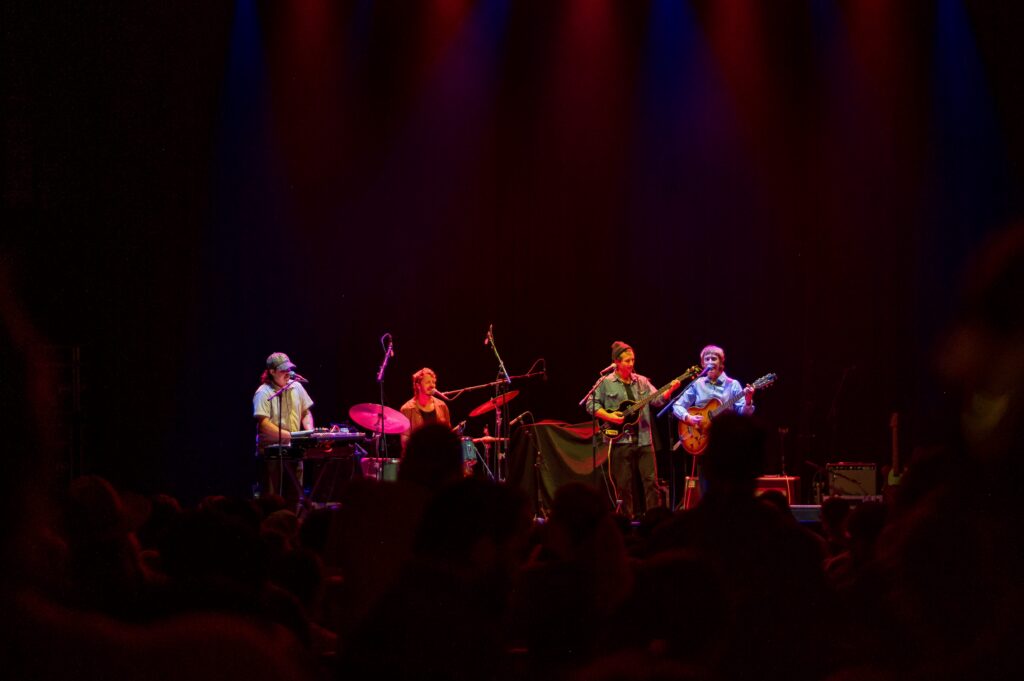
DD: I think it’s interesting you use the the term “world building,” which lends itself to the idea of escapism found in a lot of sci-fi and fantasy. The need to escape to some other world for a little.
AW: I think there’s part of music that is escapist as well that we tried to do. We’ve put out songs on the EP that are so earnest and carry so much weight. But I feel like we’ve also put out songs that are really playful and lighthearted, There’s an escape to both of those things. I’s all fiction, you know. Even if you write a song about your own experience, you’re still creating fiction that then goes out and lives in the world. There’s absolutely escapism in that.
CW: I think grief is grief is also a portal, just like any other emotion, too. It kind of brings you into another dimension of your own existence and that space feels it’s so interesting to tap into the actual ramifications of what that means, and and then like to perform it to people is a wild experience.
AW: I think that’s our goal a lot of the times with music. To follow the reference I brought up, something that occurs in a lot of Clarice Lispector stories is a person going through their daily life and then they witness some scene, like a cockroach in the room or a blind man walking onto the train it totally derails the character’s entire inner world. That’s sort of sometimes our intention with music, to put out a song that, if someone listens, it’s not passive anymore. It grabs their attention and shakes something loose inside of them — whether it’s really joyful and brighter or it’s darker and more heavy — that it would be like something to pull us out of the present moment a bit.
DD: I feel like we could go on a tangent just talking about books for forever, so I am going to move on, but I’m curious about the approach to songwriting, like the actual nuts and bolts of it. It sounds like you guys typically start out with lyrics and let the music form around them. Is that correct?
CW: I think it depends.
AW: We tend to be a little bit solitary in the beginning processes. Either Cor or I are usually sitting down with a guitar or synths or some piano and creating usually in tandem lyrics and music to build the structure of a piece. Then, we’ll usually bring it to each other, to the band, flesh things out, but Cor also sometimes just writes an entire song, like in the back of a car on their voice note app and I can’t do that, but it’s amazing.
CW: I get these lightning strikes sometimes. It can be very bizarre. Sometimes, it’s like melody mixed with with lyrics. I think I wrote actually the EP’s first song, “Time Comes with a Blade” in a cafe while I was waiting for a friend to show up and every single lyric came to me in an exact moment. I had been thinking about the idea for a while, and I just didn’t know where it was going until then. I think even the phrase “maybe time comes with a blade” was somewhere in me, and then in that moment it dislodged into this thing that just like I couldn’t stop writing, and then it was done.
AW: I spend like 20 hours every time I write a song [laughs].
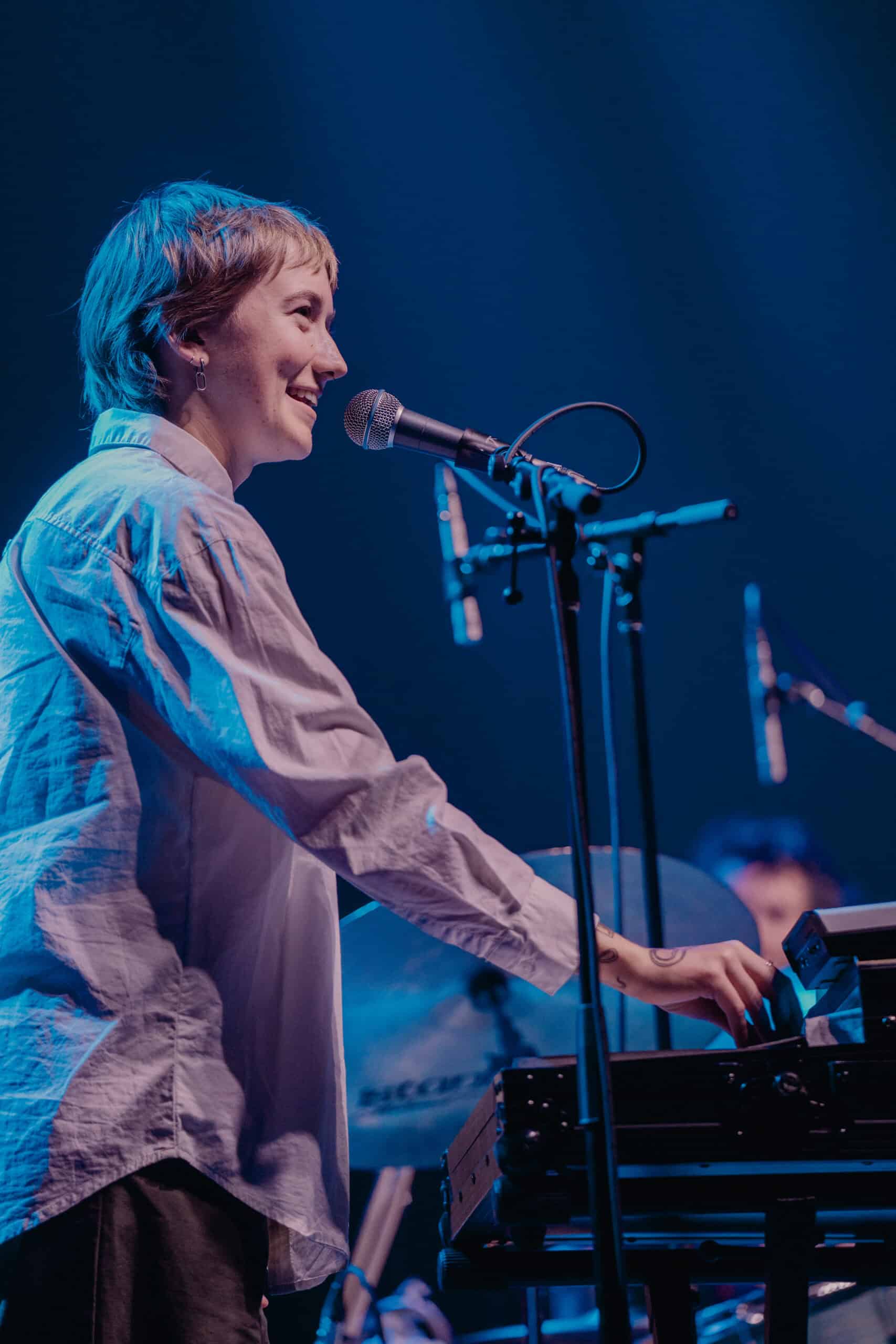
DD: I get it. Sometimes when I’m writing it’s exactly how to you describe, Cor. Lightning strikes and words just falls out of you. Then other times you stare at a blank page for a week thinking “goddamn, get this thing out of me.” I just find that very interesting, that dichotomy between the lightning strike and sort of forcing the process. But I must say I’m fascinated by y’all’s process and by the EP itself. It’s fantastic. Does this one feel different than the works you’ve done before? Does it feel more like a continuation of things that you’ve done before or more like delving into new territory? Also, what do you hope listeners can take away from it?
AW: Something we’ve been playing with a little bit is this larger narrative that seems to be emerging with the things we’ve released. Our first record, “New Creation Myths,” felt like this exploration of origins and almost like childhood and where you come from and “Micro Spirit” felt like a lot of adolescence and sort of waking up to the beauty of the world around you and connection and coming into yourself. I think that “Circles and Visions” feels like the moment in a lifetime where you are hit very hard with the reality of adulthood, that next moment where you’re hit very hard with the reality of the world. Wow we came to recording these songs too, like we already had another full-length record that we were sitting on — and still are sitting on — but we realized we have these songs that felt urgent and heavy and hard. So, we talked to our friend Mark and there was time available to go into the studio and it all happened very quickly. We decided to put it out like six months after we recorded it.
CW: It’s very rare for us too, because we’re pretty patient about things and there was a bit of a fumbling.
AW: That’s what I hope people get from it too, is to not run from those emotions when they come. When like you are hit very hard with the reality of the world or pain, lean into it and not away from it. I think that’s what we tried to do with making the EP. That’s what I hope people feel when they listen.
DD: Y’all are currently on a break from tour. What can fans be expecting from these coming shows?
AW: I think we’ll probably be trying out new material, which is always really fun. I think we use Colorado shows as a way to try new things out, especially because we usually get to have a full band with us in Colorado, so I’m excited to try new songs. Connecting to the Colorado scene feels really nice to do. A lot of the shows we have in Colorado this summer are with a lot of other local bands that we admire, so that feels really nice.
CW: We’re going on tour with a band called Palmyra too, and those shows I think once again are going to be a lot of exploration. When Ali and I do duo sets, it’s usually a lot of like we’re leaning sort of into the ethereal modular space, which means there’s potential for some fucked shit, but that’s cool too.
AW: Our sets are always different. Every tour we have a different setup. This one coming up is a duo tour so it’ll be kind of experimental,
DD: Well, I’m very excited for y’all which brings me to my last question. We probably have covered this throughout this conversation, but I do like to ask it. It’s a broad question. Feel free to answer however you like. Do you have a philosophy when it comes to creation?
AW: I think that what is coming to me now is that my philosophy with creating is to hold truth, and I think that that is a simple way of saying a lot of things that sort of hold me accountable to the art that I make to myself and to the people that hear the art and engage with it as well as people that I make art with. I think I’m always thinking to tell the truth.
CW: Yeah, I think I think that there is for, for me, sort of a like a north star for everything I’m looking for and my philosophy behind creating is to try to find and follow that star. I think some of that includes being honest as well and that honesty also creates a space to actually look at the world and actually look at myself as a member of everything that’s going on and say that I have a part in it all and it all has a part in me as well. I would say creating from that space feels like the most honest that I can be.
DD: Well, thank you guys for sharing that. I really appreciate it. And that was my last big question. The only other one I have is, anyone you want to shout out, anything else coming up that you want to mention?
CW: I’m doing this weird train tour meandering thing with my We Are Forest project. I’m going to be stopping in four cities and just sort of loosely exploring the concept of improvising.
DD: This was a truly beautiful conversation and thank you so much for taking the time. I wish y’all all the best and will be in touch soon. Have a good one!
AW: Thanks for such nice questions! Have a great rest of your day.
Stream the “Circles and Visions” EP here!
Frail Talk next Colorado performances will be at at DIY gallery show on July 5th followed by Blucifer’s First Rodeo the weekend of July 23rd-26th. Find tickets to both and check out the rest of Frail Talk’s tour here!