
Ten years ago, “fake news” was a phrase some of us may have brushed off as something “no one in their right minds” would buy into. Back when electing a reality show host to the country’s highest office seemed out of the realm of possibility, we may have even laughed it off, turning “fake news” into a phrase we’d meme with our friends.
And don’t we look so naïve in those memories?
While many of us saw the writing on the wall during his first presidential run, it would be nearly impossible to dissect every detail that led us to this point, ten years later. To avoid publishing online media’s first-ever 6-million-word think piece, this article will focus on a phrase that, over the past ten years, has become a regular part of United States vernacular: fake news.
While it’s difficult to say that long-term strategic planning is a strength of our current president, his consistent “fake news” allegations over the last decade have laid the foundation for something far more sinister. In the ten years since he was first elected, he’s cried “hoax” countless times: polls and approval ratings, crowd sizes, election results, climate change, publications like CNN and the New York Times, too many to name.
He has even, somehow, managed to convince his supporters that the Epstein Files are a “Democrat hoax,” despite the files mentioning Donald Trump more than 38,000 times in just the unredacted portions alone.
By introducing “fake news” into the zeitgeist, Donald Trump and the loyal members of his administration have created for themselves a credit line without limit. It eats the blame for their every moral wrongdoing, somehow spinning solid evidence of corruption and violence into a fiction and distracting us with shiny new scandals every few minutes.
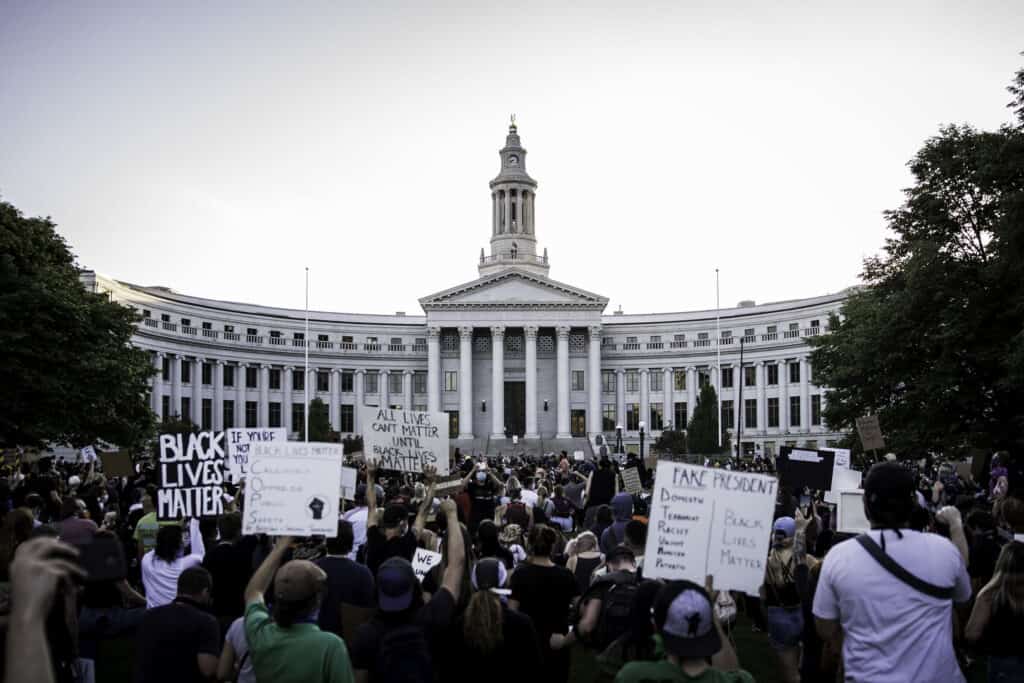
Just this month, on October 14, Federal Judge Timothy Kelly ruled to temporarily extend White House press access for CNN, MS Now and Politico. This temporary decision comes almost four weeks after the Oval Office announced a press ban against the three news outlets. On September 19, 2026, journalists for CNN, MS Now and Politico were blocked from entering the grounds and, thus, blocked from participating in the White House Press Pool. The other members of the Press Pool, including Fox News, ABC and CBS, stood in solidarity with the banned networks, choosing to suspend all coverage until the White House reversed its decision.
And thus, lawsuits ensued. CNN, MS Now and Politico are charging the White House with First Amendment violations, including freedom of speech and freedom from viewpoint discrimination as well as constitutional due process protections. Until the matter goes to formal trial, Kelly has ruled that the publications may continue to cover goings-on at the White House.
And while the case continues, the American people watch as our freedoms hang in the balance: not just freedom of the press but of speech and thought as well.
Now, you may be thinking: Wow, I forgot that whole press ban thing even happened! It feels like we’ve lived at least three lives since then.
And you’re valid for feeling that way. That Guy was elected for the first time almost exactly ten years ago, and every day since has presented us with offerings from two distinct and equally terrifying categories: “seriously, we’re fighting this battle again/still in 2026?” and “oh, wow, that’s a new level of horrifying I never thought we’d see.”
It’s overwhelming. It’s hard to keep track. It’s exactly why this press ban should concern you. The news cycles so fast that, just as we start to process something unprecedentedly horrifying, another thing happens.
Granted, many Americans see the right’s cries of “fake news” for what they are: shirking accountability for the evil Donald Trump and his loyal followers have perpetrated. Nevertheless, ten years’ worth of claims that any unflattering news is untrue has impacted the general public’s ability to distinguish real from hoax.
With the surge in AI use, even the intelligent among us sometimes have difficulty discerning the real from the doctored. And Facebook users, for example, are even more vulnerable. Sure, it may be amusing for your grandmother to ask if the video of Mitch McConnell backflipping out of a plane is real, but the reality is nothing to laugh about. If some are vulnerable to believing even the most absurd, they are even more susceptible to those in power pulling much more dangerous wool over their eyes.
Pair inescapable AI and an untrustworthy Commander in Chief with an attack on critical thinking (thanks, in large part, to the education gap caused by the COVID-19 pandemic), and the United States of America is undergoing a major media literacy crisis and a hefty helping of good old-fashioned trust issues.
This mistrust empowers American citizens to accept only the news they want to accept. In this universe, when you dare to criticize someone with power – whether that’s a politician or a certain pop-star-turned-climate-criminal, you may be met with “the bots must have gotten to you.”
In this universe, the power of some individuals sometimes transcends criticism. Dare to disagree, and it’s unfathomable that you came up with those critiques yourself. It must have been the bots.
At the same time, natural human slip-ups are punished on the same plane as inhumane violence. Quick scrolls and comment section in-fighting are distracting enough to ensure the violence typically isn’t punished at all. Nuance is flattened, and black-and-white thinking reigns supreme, within which there can only be “good people” and “bad people.”
It’s a catch-22 and an impossible standard, where TikTok headlines are absolute truth and critical thought must be a coordinated bot attack.
“Fake news” didn’t just spark mistrust between the government and press outlets: it widened the mistrust we have toward each other.
In our nation, news cycles are fast enough to spin your head. We are constantly forced into new outrage day after day, fed so much information that our brains short-circuit. It feels impossible to remember all the details, impossible to fully inform ourselves of everything we should be informed about: horrific conditions in ICE enforcement centers, men of all ages dogpiling a college-aged woman who must have “wanted” her body to be brutalized for seven straight hours; the erasure of transgender identity from existence, both in our country’s history and, for individuals in Kansas who are taking the state to court for voiding their driver’s licenses, from the present.
To name just a few. And this isn’t just “news” we can forget about when the weather guy takes over on the 6 p.m. show. A large majority of United States residents endure gut-wrenching reality day after day in the form of poverty, systemic oppression and senseless violence.
Each day, we’re confronted with more, so quickly that we’re outraged and injured again before we get a chance to fully act on our outrage. And if we don’t trust each other, action will remain impossible.
Perhaps that mistrust, then, is what makes the attempted press ban so unsettling. Sure, Judge Kelly has already indicated that the ban has no staying power. But whether or not the ban survives, the message is clear: free press is on the chopping block. While many Trump supporters remain fiercely – violently – loyal, some are experiencing derealization, coming to terms with the notion that they aren’t the exception. That the chronic liar in the White House may have actually lied to them, too.
And with more Americans catching on to the current administration’s schemes, crying “hoax” might not be a viable strategy much longer. The next plan of action, then, must be stopping news at the source – at least from the publications that don’t bend the knee.
As for the rest of us, it will be challenging to undo the damage that ten years of Donald Trump and decades of systemic hatred have already done. Unlearning the etiquette of “hope this helps!” culture is not an insignificant undertaking.
But it’s not impossible either. That is where community comes in. We are the children of the witches they couldn’t burn and the Panthers they couldn’t cage. We’re the descendants of the activists who wrote the book on civil disobedience and the librarians and professors who helped us find that book, who passed along their knowledge so that we may learn from their triumphs and failures.
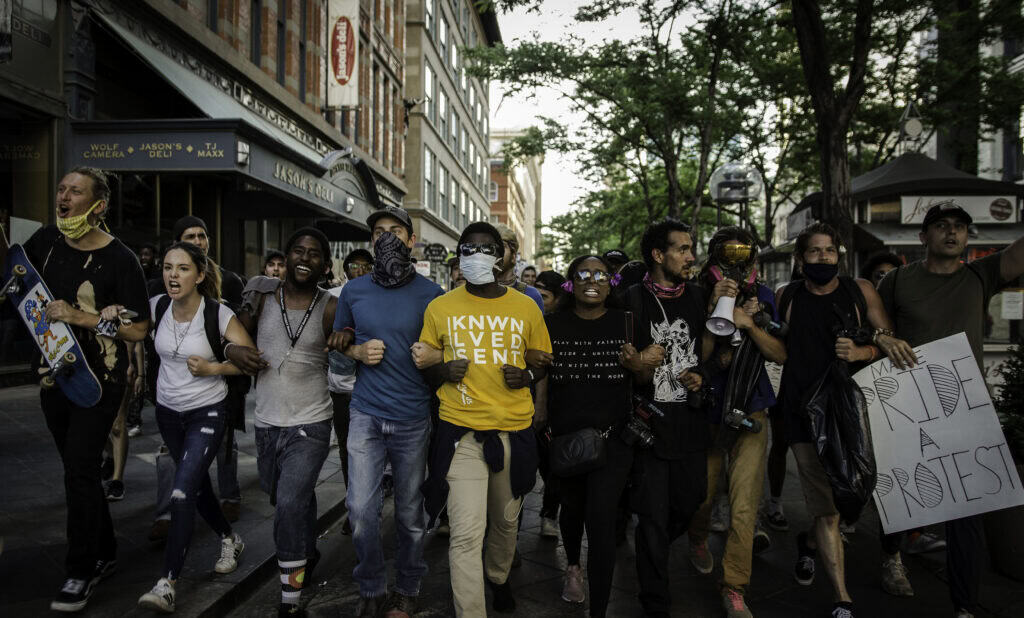
It’s time to use that knowledge beyond sharing an infographic or arguing with strangers in a comment section.
Sure, our phones can introduce us to the movements, but they cannot do the work for us. We must bring that effort outside of the screen and build coalition with people whose lives, experiences and perspectives differ from our own. We must show up to community meetings, volunteer with local organizations, support local journalism and get to know the people who live alongside us – even if that means actually having those difficult conversations face-to-face.
We cannot rebuild trust in one another if we never give ourselves (and each other) the opportunity to earn it.
A free press is not simply a collection of newsrooms with permission to enter the White House. It is the foundation where an informed public is built, where we gain the tools and resources to challenge those in public office and exercise our right to think critically about the world we inhabit. When journalists are silenced and when facts become a matter of political allegiance, our collective ability to hold power accountable weakens.
READ: Maximalism is Resistance: Why Denver Style Needs to be Bolder
A threat to the freedom of the press is a threat to the freedom to think for ourselves. And that freedom means very little if we cannot recognize the difference between a credible source and manufactured outrage. It means very little if we cannot see beyond black-and-white thinking to come together and put our research and our unique thoughts into action – seeking to understand our differences instead of villainizing what we don’t understand before using that collective knowledge to organize, protest, teach and listen.
The activists who came before us did not win their freedoms by keeping their convictions to themselves. Many of them are still alive, fighting the same fight again. We owe it to them to finally take the torch they’re passing us and to hold that torch responsibly.
We owe it to each other to hold power accountable.
Long live journalism. Long live critical thought. And long live the communities that make both possible.
All photos by Evan Dale.